Why we made it
Number puzzles have long been a game of pencil and paper. You count cells, draw lines, and rub out mistakes. The joy of finding the answer was big, but what stayed on your fingertips was always the scratchy feel of paper.
That feel was what we wanted to change. What if, instead of drawing a line, you stretched a jelly? Drag a numbered jelly with your finger and it stretches, soft and squishy, and when you let go it sticks into the cells.
A squishy texture you have not felt before is the heart of this game. Jelly Stretch began with that feel.
Cutting and dividing puzzles, a few scenes
Puzzles that cut shapes apart are countless, and their roots go back a very long way. Here we look at only a few scenes that resemble Jelly Stretch.
The oldest recorded scene comes from ancient Greece in the time of Plato (427–347 BCE): cut two equal squares into four pieces and make one larger square. In 1902, Henry Dudeney set the Haberdasher’s Puzzle — cut an equilateral triangle into four pieces that make a square (Wikipedia). In Japan, puzzles that cut a shape and join the pieces into another are called 裁ち合わせ (tachiawase) (Wikipedia, in Japanese).
In 1980, Japan’s first puzzle magazine, パズル通信ニコリ (Puzzle Communication Nikoli), came out. Most of the puzzles it prints are sent in by readers (Wikipedia, in Japanese). In April 1984, Nikoli’s Maki Kaji introduced a number puzzle in Japan — the puzzle that would later spread around the world as Sudoku. On 12 November 2004, The Times in Britain began printing it (Wikipedia).
The scene closest to Jelly Stretch is 四角に切れ (Shikaku). You divide the grid into rectangles, each holding exactly one number, and that number is the rectangle’s area (Nikoli). The puzzle was proposed by turning the cut-and-join puzzles (tachiawase) then running in Nikoli into a pencil puzzle, and it first appeared in issue 27. The person who sent it was a reader at the time; they later became editor-in-chief, and in 2021 president of Nikoli (Wikipedia, in Japanese). English Wikipedia dates the puzzle to 1989 (Wikipedia).
The same rule moved onto screens too. Simon Tatham’s puzzle collection has it under the name Rectangles, and he credits Nikoli for the game (Simon Tatham).
Puzzles that cut and rejoined shapes became puzzles of pencil lines, and on screens you dragged out rectangles with a mouse. In Jelly Stretch, you stretch a jelly with your finger. We kept the rule and changed what touches your hand.
What we kept, what we changed
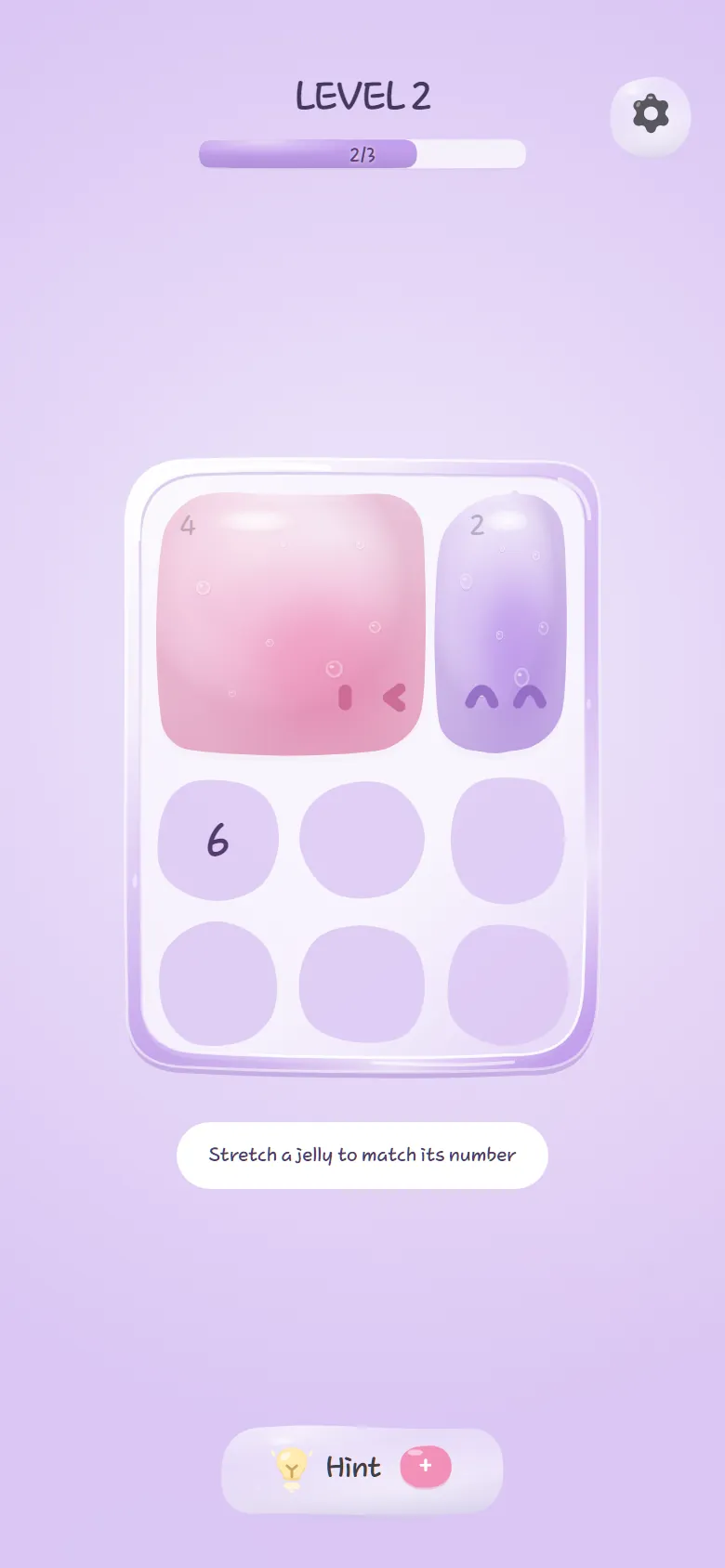
The number is the rectangle’s area, one number per rectangle, and the board filled with no gaps — we kept that skeleton. A jelly with a 4 stretches into one of three shapes: one row (1×4), a box (2×2) or one column (4×1).
We changed three things.
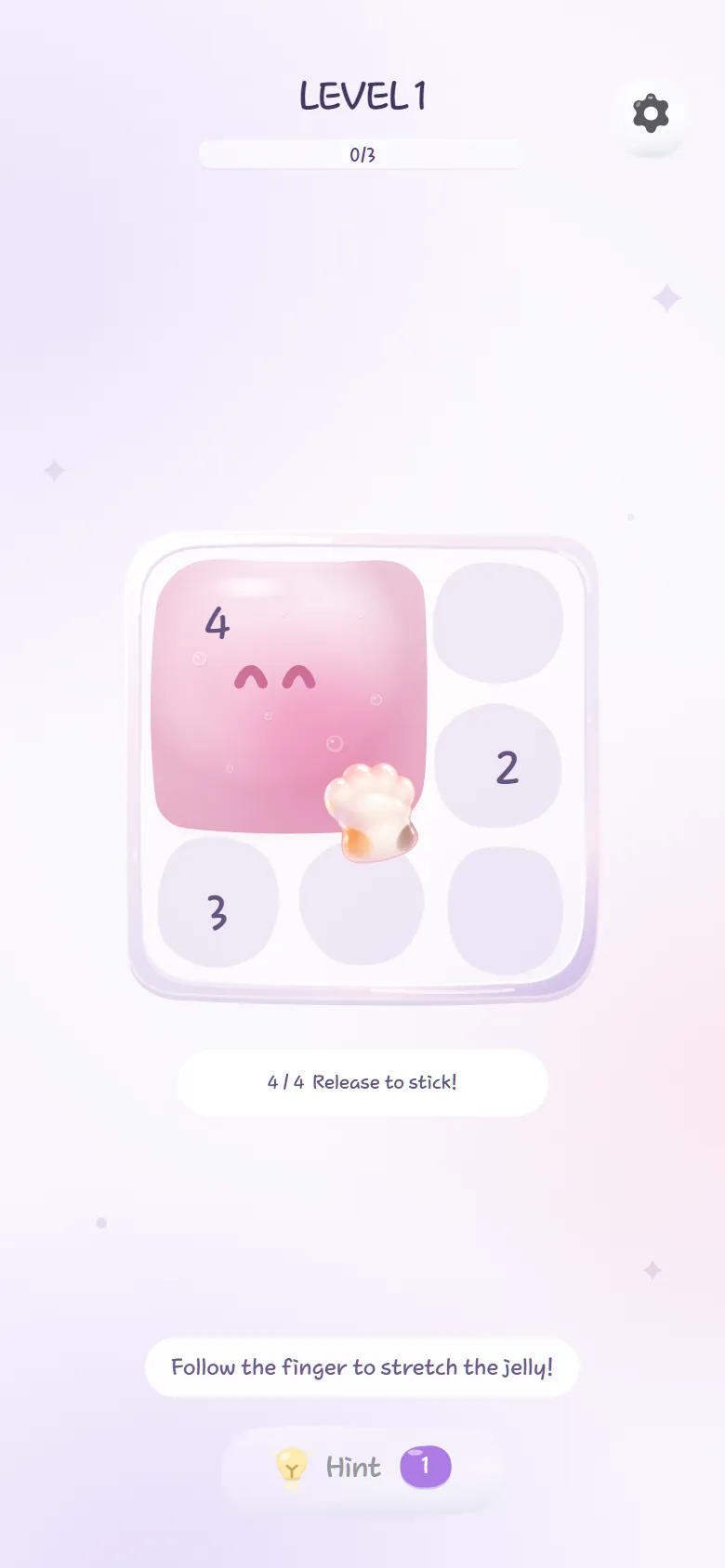
- The hand — instead of drawing a line, you stretch a jelly. Too short and it says ‘Keep stretching…’; stretch it to its number and ‘Release to stick!’.
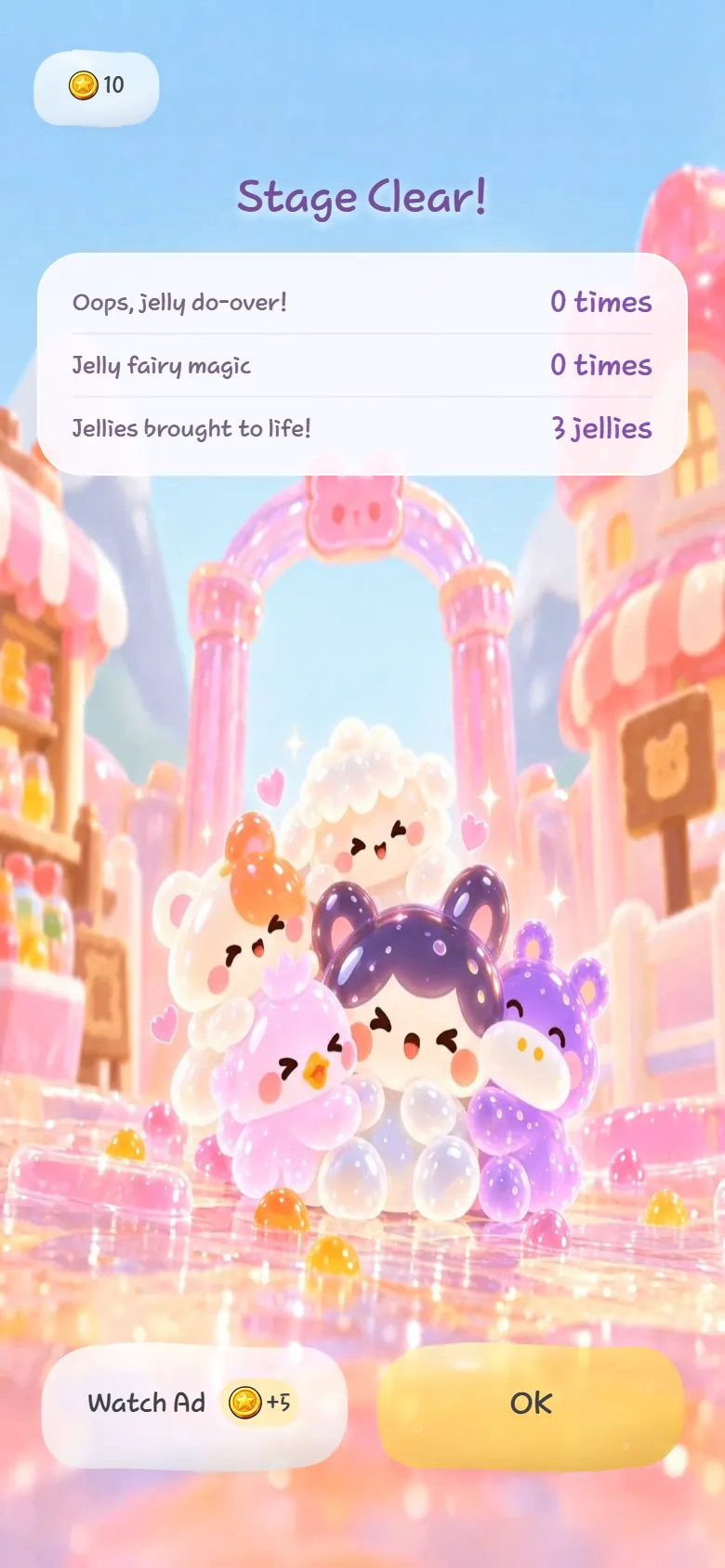
- The texture — the squishy jellies have faces. Fill the board and ‘A perfect little family!’
- Gimmicks — each one adds a rule to the board, and each changes just one thing.
| Gimmick | What it changes | Rule |
|---|---|---|
| Wake the frozen jelly | order | A frozen jelly can’t stretch yet. Finish as many other jellies as the snowflake shows and the ice cracks open. |
| Follow the arrows | shape | Side arrows stretch only along one row, up and down arrows only along one column, and corner marks make a box at least two cells each way. |
| Shh! A sleepy jelly | information | It hides its number while it naps. Place a jelly right next to it and it wakes up with its number. |
| ? | ? | From here on, meet them for yourself. |
| ? | ? | ? |
| ? | ? | ? |
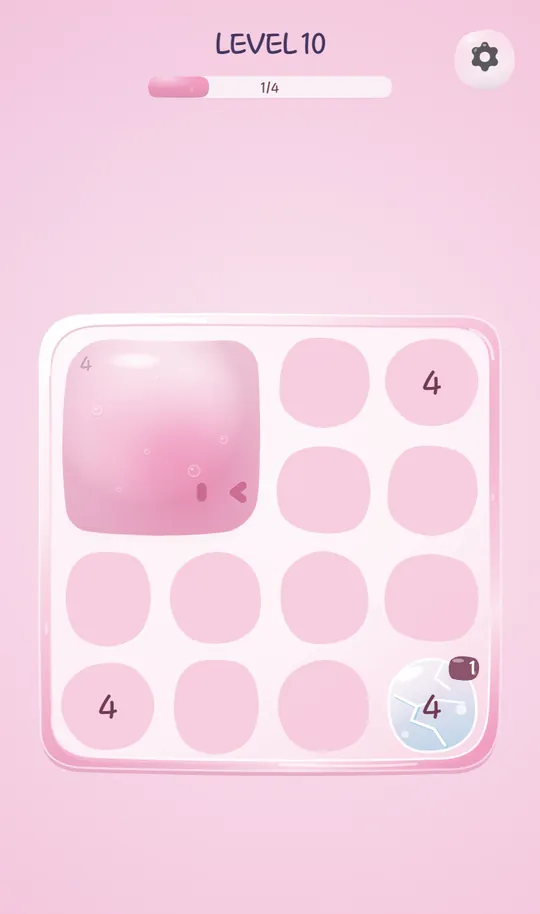 Ice · Level 10
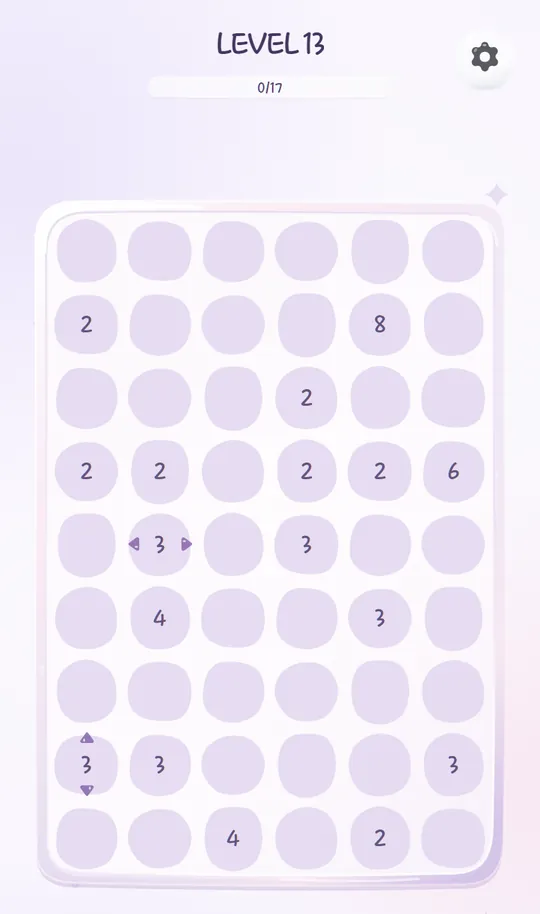 Mold · Level 13
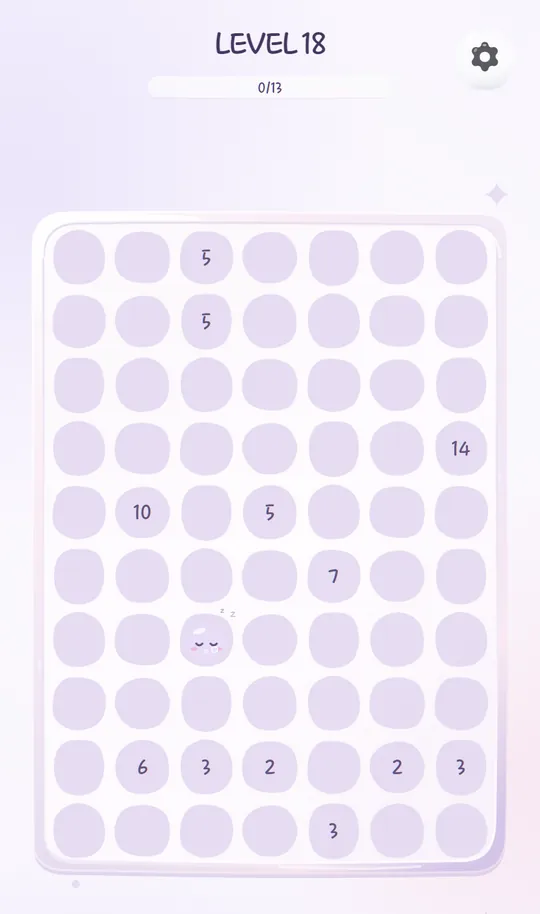 Sleepy · Level 18
Jelly friends
Every jelly is a friend with a face. Big jelly friends wait for you in the lobby, and when you fill the board they all gather to celebrate the Stage Clear.
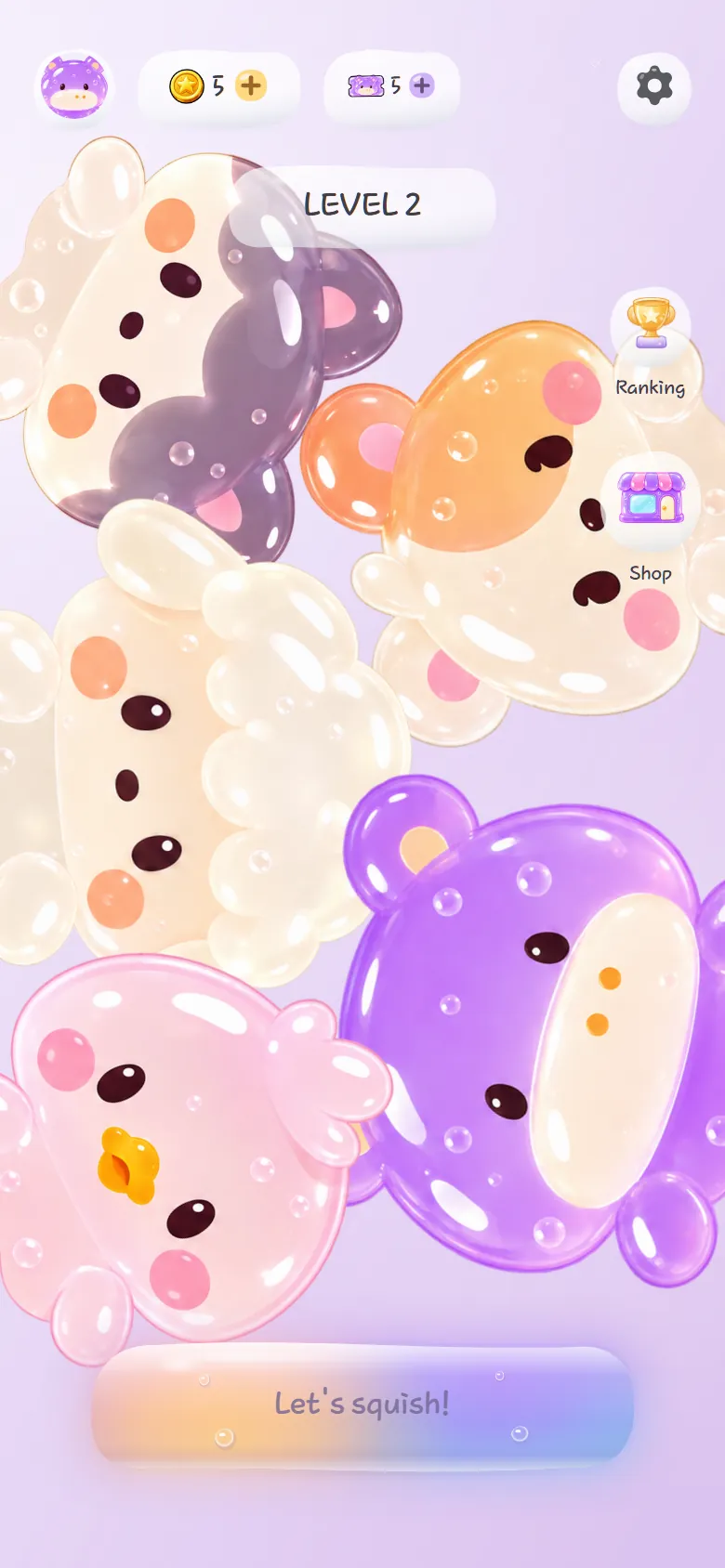
For now there is one mode, Classic, and we keep growing the game.
As the empty cells fill one by one, we hope even a stiff day softens a little, starting from your fingertips.
How to play
- Drag a numbered jelly with your finger to stretch it.
- Make a rectangle that covers as many cells as its number — the number is the area.
- Each jelly holds only one number.
- Fill the board with no gaps to clear it. Stuck? Use a Hint.
Sources — Dissection puzzle (Wikipedia) · 裁ち合わせ (Wikipedia, in Japanese) · 四角に切れ rules (Nikoli, in Japanese) · 四角に切れ (Wikipedia, in Japanese) · Shikaku (Wikipedia) · パズル通信ニコリ (Wikipedia, in Japanese) · Sudoku (Wikipedia) · Rectangles (Simon Tatham’s Portable Puzzle Collection) · Game screens captured October 2026