Why we made it
When we read the Bible as kids, we could get through it one chapter at a time, but the story as a whole never quite sank in. Whose son was this man? Where, roughly, was this place? Did this happen before that? Names, places and eras were all scattered. No wonder they were. The Protestant Bible alone has 1,189 chapters and about 31,102 verses (Bible Gateway).
So Bible at a Glance began by gathering the scattered pieces in one place. We thought that if you could see people, places, time and relationships together on one screen, and link those old stories to today's map — if past and present were connected — then even a first-time reader would see far more easily where the verse they're reading sits in the larger flow.
Seeing the Bible at a glance: a few scenes
Attempts to see the Bible at a glance go back a very long way. With timelines, with maps, with translations set side by side, with relationships joined by lines. Here we touch on just a few scenes.
Time — In the early fourth century, Eusebius of Caesarea, in the second part of his Chronicon, wrote the histories of many nations in parallel vertical columns. Each line was one year: side-by-side timelines, so to speak (Wikipedia).
Place — In the sixth century (around 542–570), a mosaic map of the Holy Land was laid into the floor of the Church of Saint George in Madaba, Jordan. Of all maps of the Holy Land, and of Jerusalem in particular, it is the oldest to survive in its original form. It first measured 21×7m and was made of more than 2 million pieces (Wikipedia).
Translation — The Complutensian Polyglot Bible, printed in Alcalá, Spain, in 1514–1517, set the Hebrew, Latin and Greek texts side by side on a single page. It is the first printed polyglot of the entire Bible (Wikipedia).
Relationships — Starting in 2007, Chris Harrison, together with Pastor Christoph Römhild, drew the Bible's 63,779 cross-references in a single picture. They gave each chapter a bar and joined connected verses with rainbow-colored arcs (Chris Harrison).
Timelines showed time at a glance, maps showed place, translations set side by side showed words, and arcs showed connections. But each of these scenes stood on its own. Bible at a Glance brought them together on one screen.
One verse, four paths
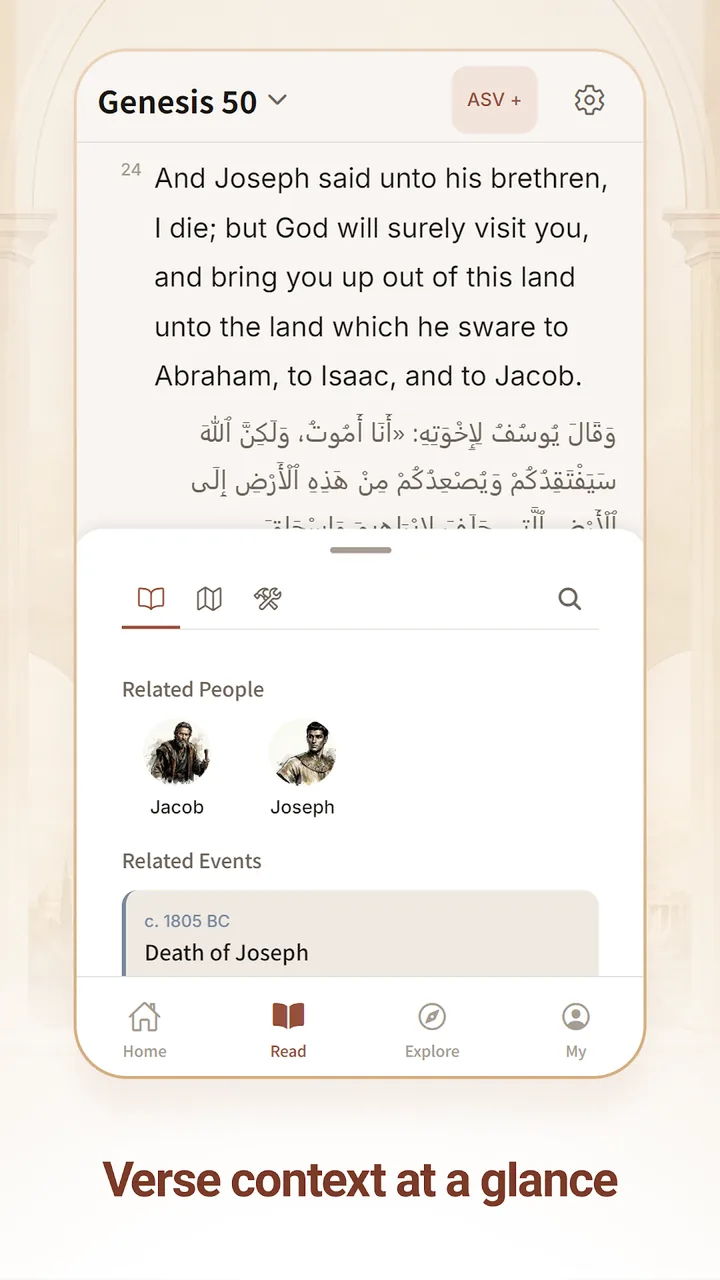
We made it so that, starting from the verse you're reading, you can go straight to the people, places, time and words tied to it.
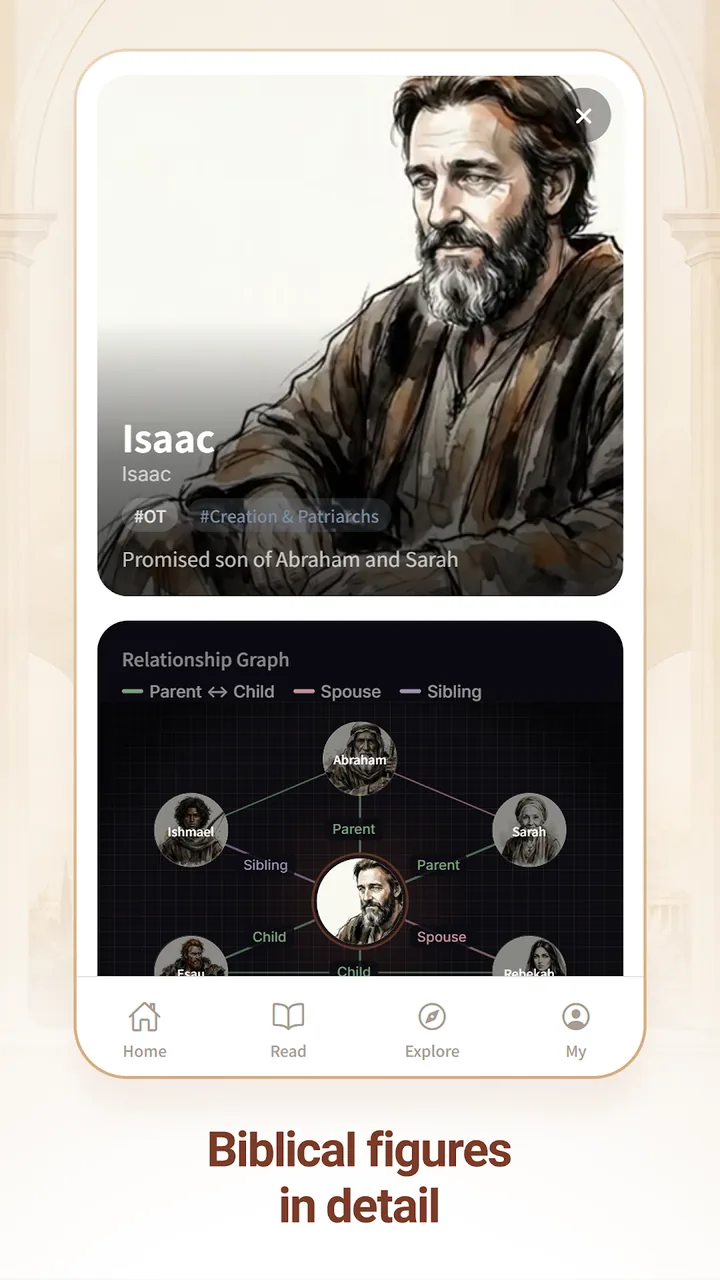
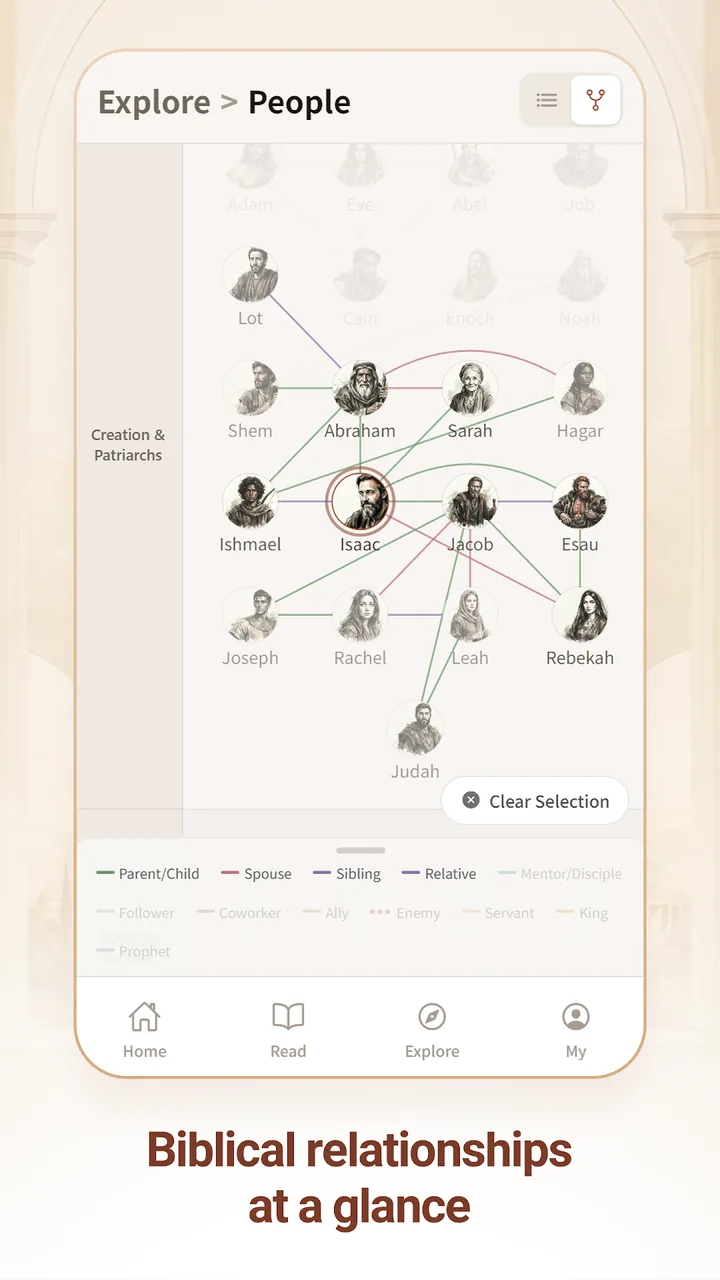
- People — Relationships like family, disciples and companions are shown linked to the text. People who seemed scattered come together in a single relationship graph.
- Places — See roughly where the places of the Bible are today, with a map and a description. It's a way of linking old stories to the map of today. You can even look around before a pilgrimage to the Holy Land, as if walking it ahead of time.
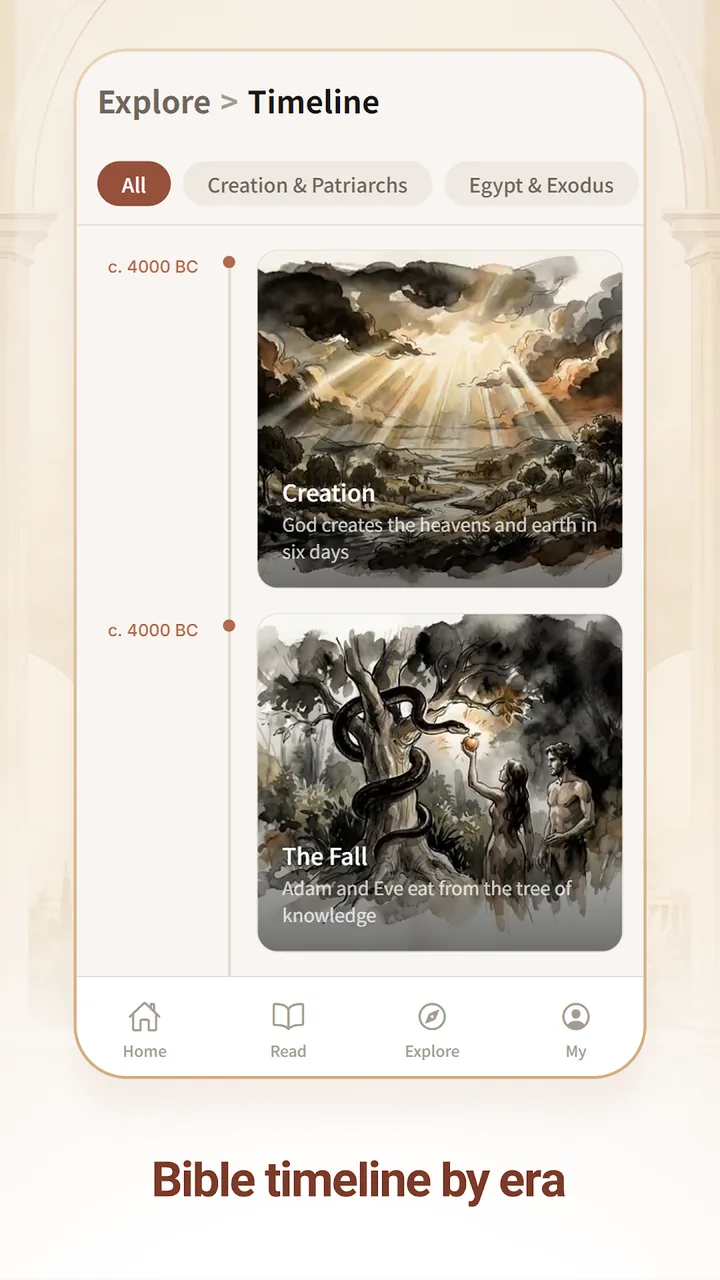
- Time — Follow the major events in order, from Creation to the Exodus, and jump to the related verses.
- Translation — It holds 24 translations in 11 languages, and you can read translations side by side to compare their wording and feel.
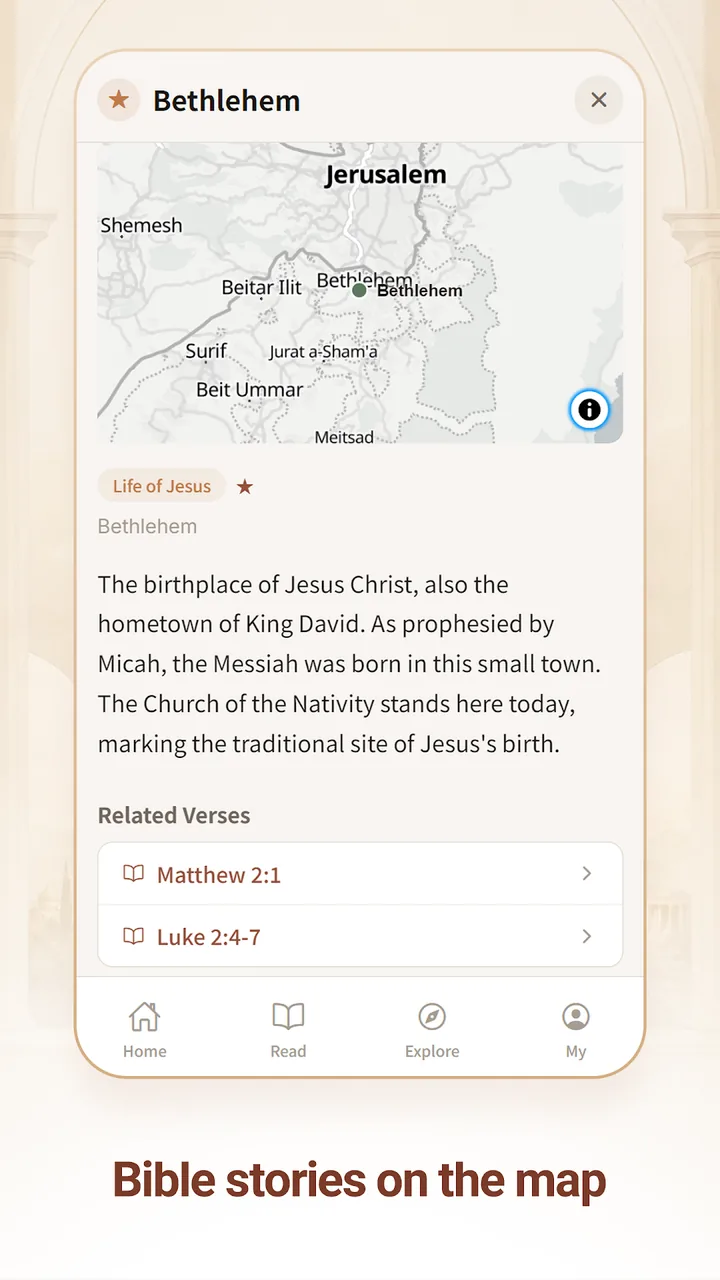
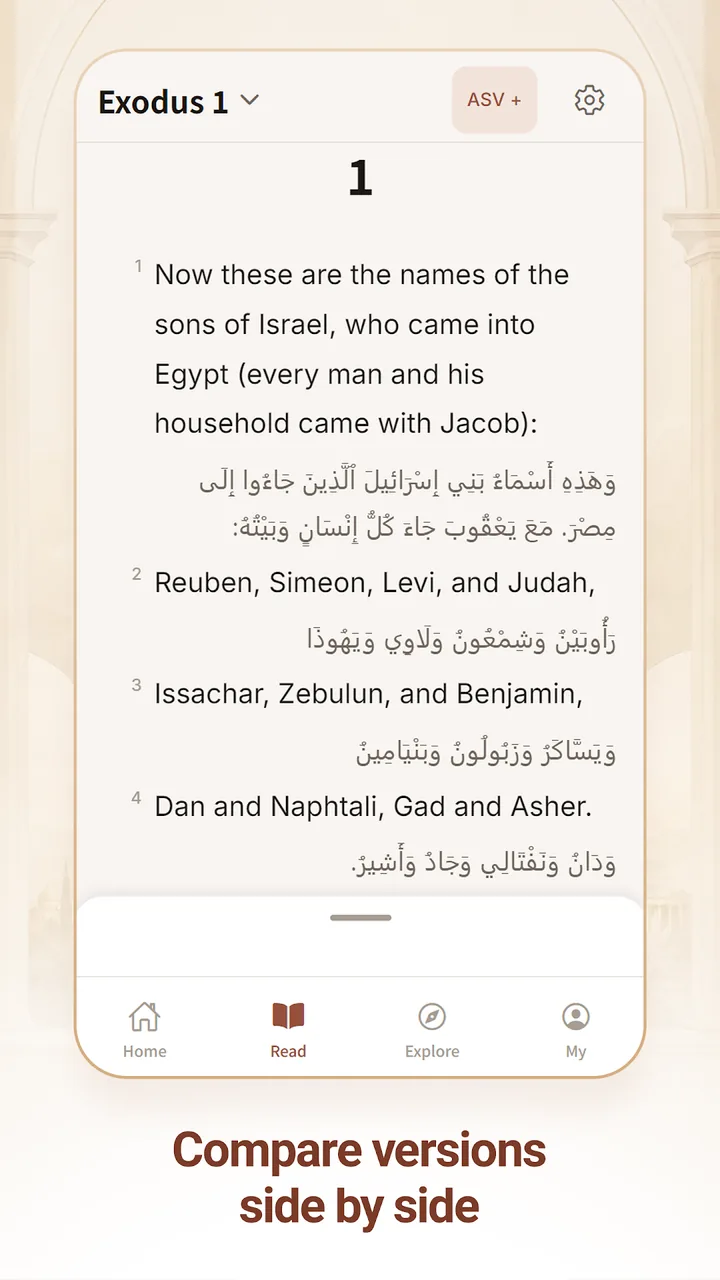
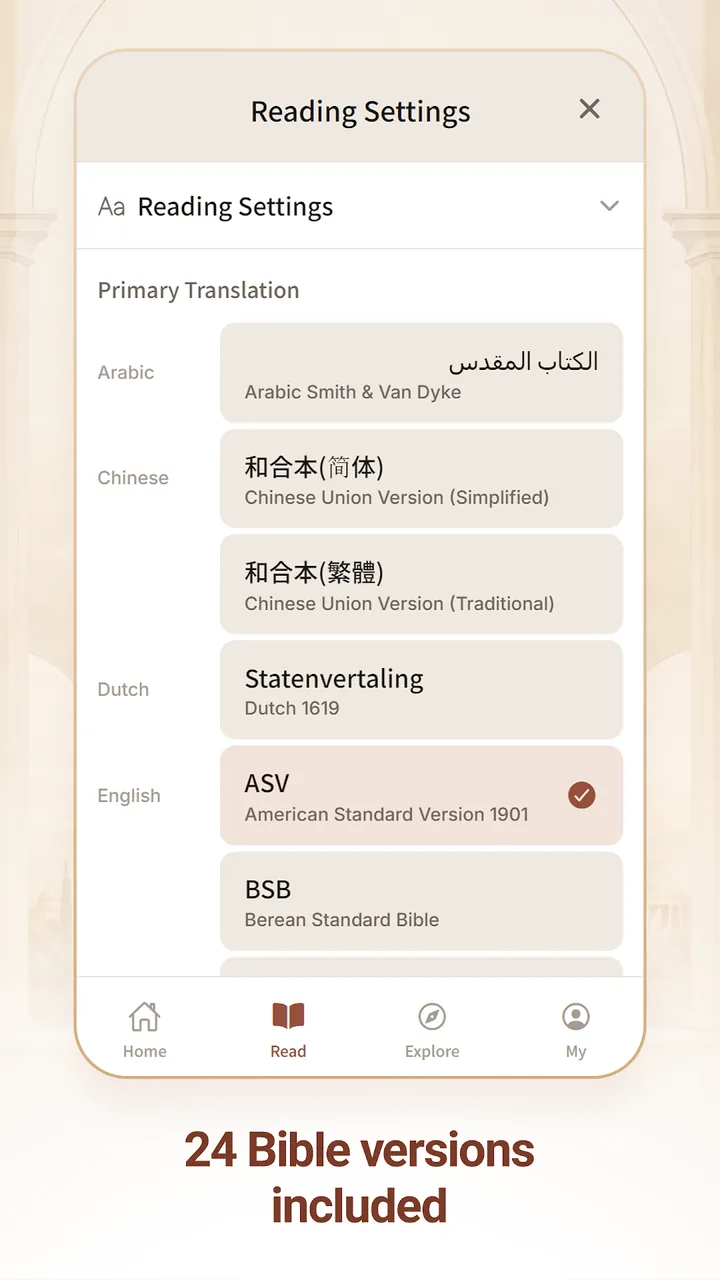
There's a reason we tried to include plenty of translations. The Bible is still being translated today. As of August 2025, of the 7,396 languages used in the world, 776 have the full Bible, 1,798 have the New Testament, and 1,433 have only portions. And 544 languages are still waiting for translation to begin (Wycliffe Global Alliance).
A remark about worship
A friend who tried Bible at a Glance told us this: it's great that there's so much depth, but during worship it's hard to dig your way down to things one at a time. While the sermon keeps going, by the time you've gone a few menus deep, it has already moved on to the next verse.
In fact, ‘finding it fast’ has long been a challenge for people who read the Bible. The chapter divisions we use today were made by Stephen Langton in 1205, and in 1230 Hugh of Saint-Cher and his fellow Dominican friars completed the first concordance (Wikipedia). Tradition has it that 500 people took part (Catholic Encyclopedia). The New Testament's verse numbers were added in 1551 by Robert Estienne, a printer in Paris, and in 1560 the Geneva Bible became the first English Bible to use both chapters and verses (Wikipedia).
Chapters and verses, and concordances too, were in the end ways to reach the verse you want, faster. So for the next chapter, we added unified search. Type what you're looking for into one box, and it finds it all at once, even things that sat deep inside. It was an update that left the depth as it was and made the way in shorter.
We'd love to hear more stories like this. If anything feels inconvenient as you use it, or there's something you'd like to see, please email cs@oddduck.ooo or bible@oddduck.ooo. We'll put your feedback to work.
What we put in, what we left out
We added an introduction for each person in the Bible. Who they were, who they're connected to, which scenes they appear in — you can see it all in one place.
Going a step further, we also tried to add a feature for talking with AI, to imagine what that person would be like if they were alive today. Asking Abraham about the day he left his homeland, say, or asking Moses about the forty years in the wilderness. But we felt that having AI speak for people in the Bible could stir up controversy we can't foresee. So we took it out. We felt that showing the text and its context, and stopping there, is Bible at a Glance's part.
We didn't put in ads, either. We built this app with real ambition, but we didn't feel we could slip ads into the Bible. So with Bible at a Glance, you can use every feature without ads.
With no ads, we don't expect it to make money. Instead, if many people come to use it, that's enough for us. In return for every visit, we'll keep updating it, steadily.
We hope the names and places that seemed so scattered when we were young become, for someone, a story that connects at a glance.
How to use it
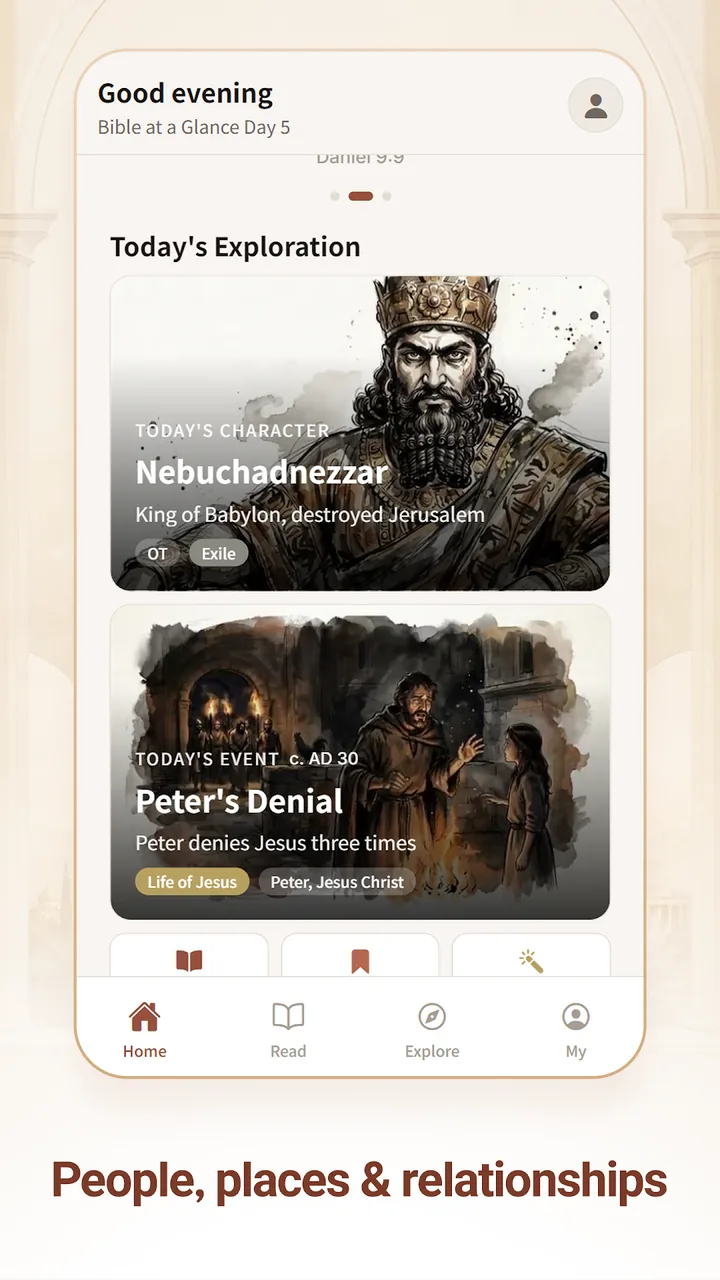
- On the home screen, meet today's character and event in Today's Exploration.
- In Explore, follow the timeline and the relationship graph.
- In Read, pick a translation and read two translations side by side.
- Looking for something? Find it all at once with unified search.
Sources — Bible verses and chapters (Bible Gateway) · Chapters and verses of the Bible (Wikipedia) · Bible concordance (Wikipedia) · Concordances of the Bible (Catholic Encyclopedia, 1913) · Chronicon (Eusebius) (Wikipedia) · Madaba Map (Wikipedia) · Complutensian Polyglot Bible (Wikipedia) · Bible Cross-References (Chris Harrison) · Global Scripture Access (Wycliffe Global Alliance) · 2025 Scripture access statistics, PDF (Wycliffe Global Alliance) · App screens: store listing screenshots