Why we made it
Queens is a puzzle with just three rules: one per row, one per region, and none may touch. With only that, the answer narrows down one cell at a time until, at the very end, everything clicks into place. We loved that moment so much that for a while we solved Queens every morning.
But what sat on the board was always a crown — neat, but a little cold. Could kids and grown-ups enjoy the same rules together, like a story? Animal Seeker began with that question.

Just then, mini games that open right inside KakaoTalk and KakaoPay were getting a second chance in Korea. We wanted a puzzle like a short pause: open the messenger, solve one board, close it. That is what Queens was made for in the first place — one puzzle a day, done in a few minutes.
Where Queens came from
Puzzles about placing pieces on a board so that none of them clash go back more than 170 years. In 1848 the chess composer Max Bezzel asked whether eight queens could be placed on a chessboard so that no two attack each other. In 1850 Franz Nauck published the first solutions and extended the problem to n queens, and mathematicians including Gauss worked on it too. It has 92 solutions — 12 if you count rotations and reflections of the same arrangement as one (Wikipedia).
The puzzle also left the chessboard. In 1972 the computer scientist Edsger Dijkstra used solving the eight queens puzzle as his example for explaining structured programming, and it is still a common example for explaining programming techniques.
The chessboard became a board divided into regions in 2003. The Dutch puzzle author Hans Eendebak created Star Battle for that year’s World Puzzle Championship in Arnhem: place the given number of stars in every row, column and bold-outlined region, and no two stars may touch — not even diagonally (GM Puzzles).
Then on May 1, 2024, LinkedIn launched three puzzle games, Queens among them (TechCrunch). It trims Star Battle down to its simplest form — one per row, column and region — and swaps the stars for crowns; the puzzle author Thomas Snyder helped provide the puzzles for its launch (GM Puzzles). A daily puzzle, one a day and done in a few minutes, it was introduced in comparison with Sudoku, nonograms and Minesweeper (FOX 13).
What stayed, what changed
It is called Queens, but its crowns don’t attack all the way along the diagonals like a chess queen. They just must not touch — side by side or one cell diagonally. In exchange, the regions from Star Battle came in, and how the board is divided became the puzzle itself. We gave those regions the faces of animals.
| Puzzle | What you place | Per row, column, region | No-touch range |
|---|---|---|---|
| Eight queens puzzle (1848) | 8 queens | one per row and column (no regions) | the whole diagonal |
| Star Battle (2003) | stars | the given number in each | adjacent cells, incl. diagonal |
| LinkedIn Queens (2024) | crowns | one in each | adjacent cells, incl. diagonal |
| Animal Seeker | hidden animal friends | one per row, column and animal region | adjacent cells, incl. diagonal |
How the rules became a story
Instead of crowns, we hid animal friends — and gave them a reason to hide. One night a strange shadow put a curse on the rabbit. Its eyes turned red and it ran wild, and the frightened friends hid all over the village.
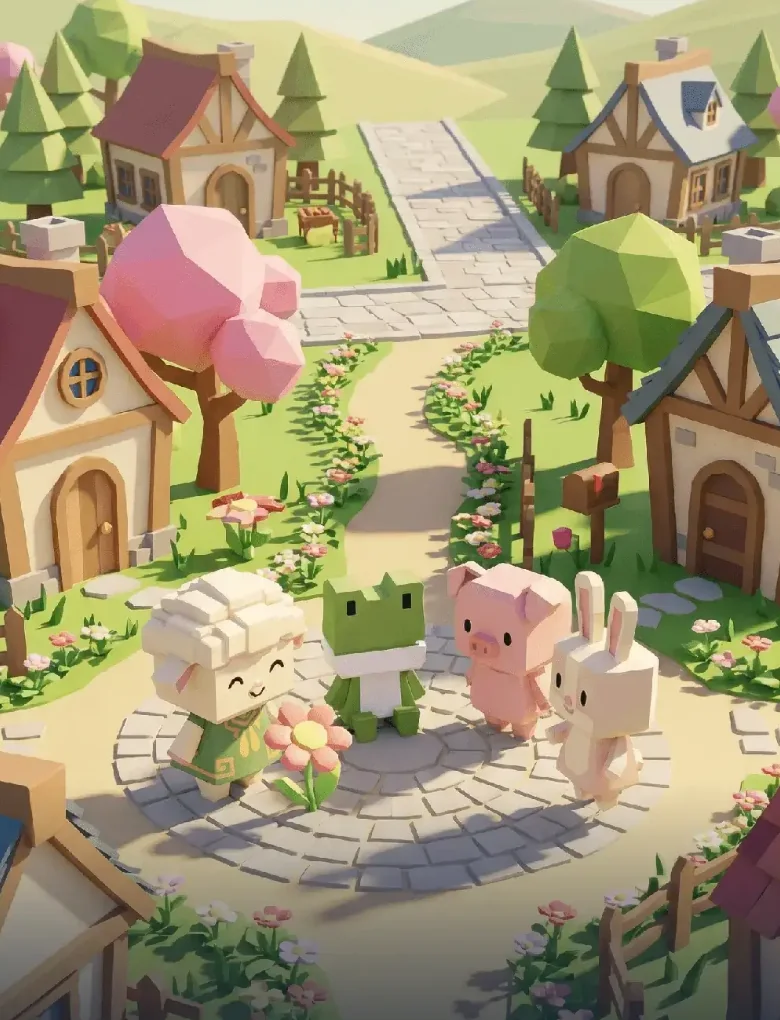
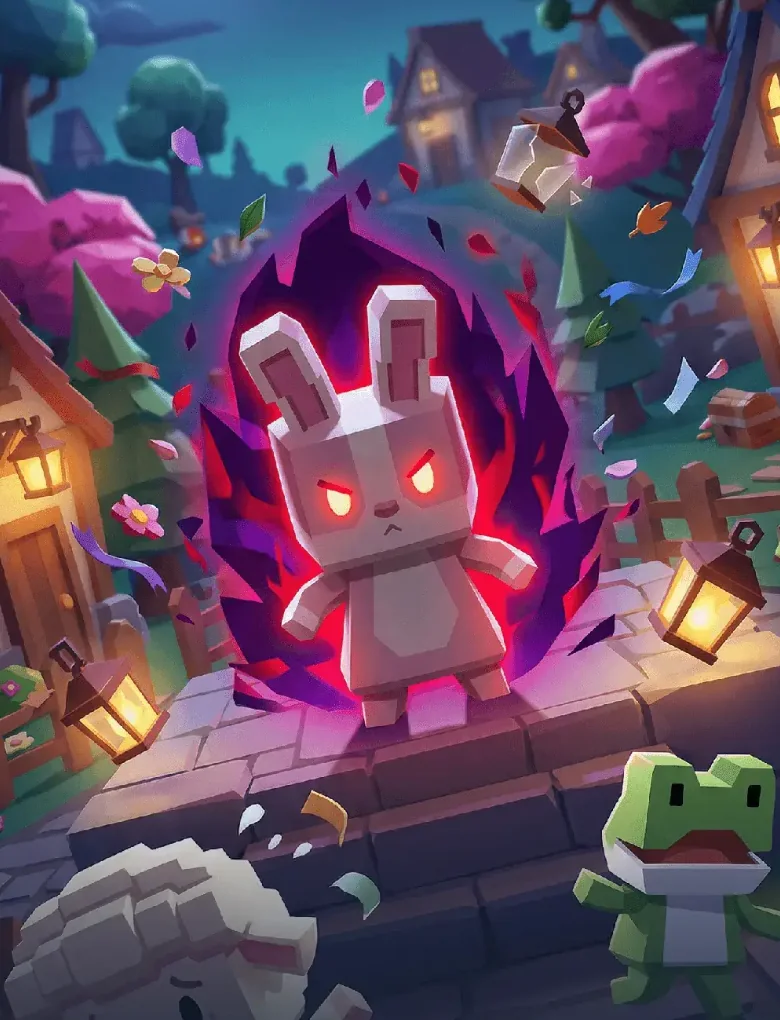
With a story, the rules started to feel natural. The friends never hide right next to each other — of course not, or they’d all be found at once. One in each animal region, one in each row and each column. The rules of a 170-year-old puzzle become the rules of hide-and-seek.
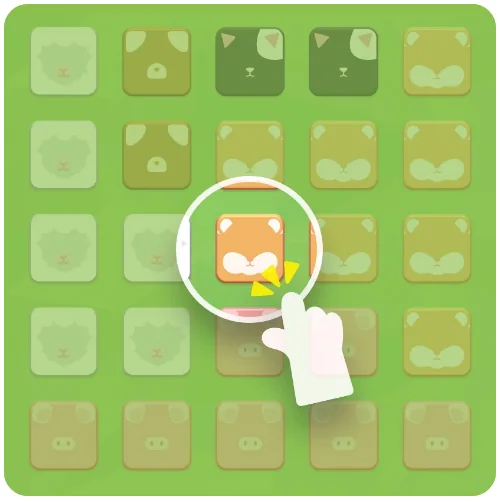
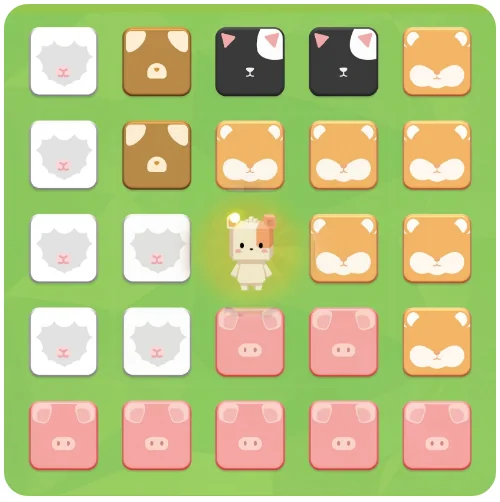
The first board starts with a single wobbling sheep box instead of a manual: “더블 탭 해봐!!” (“Double-tap it!!”) — so you learn with your hands before you read anything. Boards start at 4×4, and the number of friends left to find shows at the top, like 0/4.
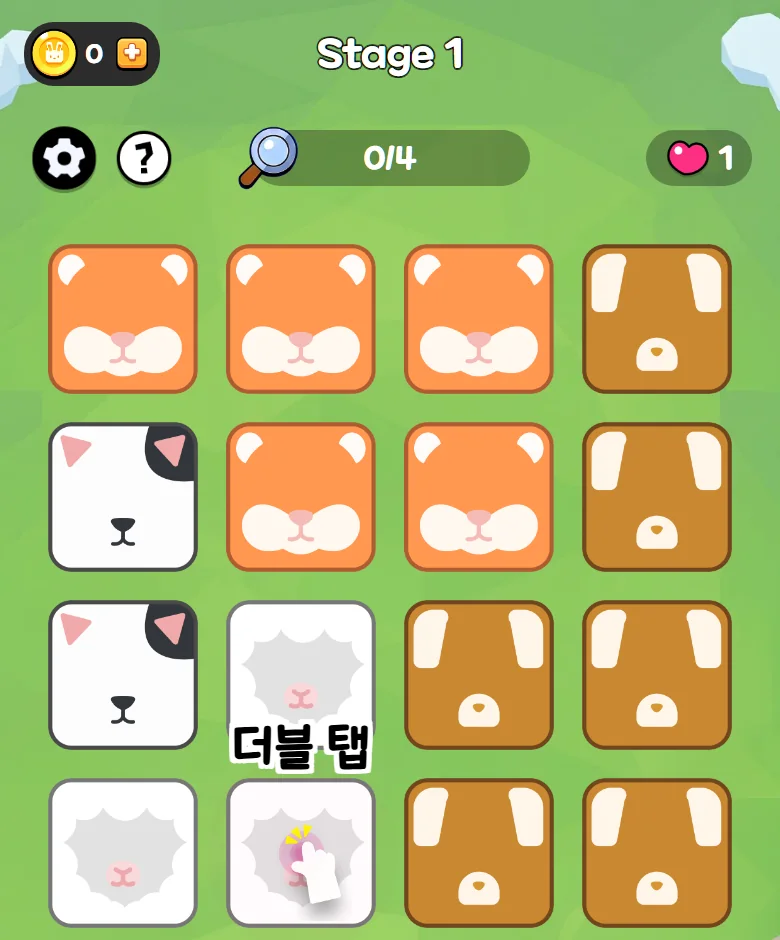
Opening a box and finding a friend hiding inside — that small “found you!”. It is the same moment the first solvers of the eight queens puzzle must have felt, and everyone who solved Queens on LinkedIn this morning. We hope kids and grown-ups can share it on the same board.
How to play
- Each animal region hides exactly one friend.
- Each row and each column has only one friend.
- Friends never touch — not side by side, not diagonally.
- Double-tap a box to find the friend hiding in it.
Sources — Eight queens puzzle (Wikipedia) · Star Battle Rules and Info (GM Puzzles) · Star Battle (also known as Queens), 2024-09-08 (GM Puzzles) · LinkedIn launches gaming, 2024-05-01 (TechCrunch) · LinkedIn adds 3 games, 2024-05-04 (FOX 13) · Game screens captured 2026-10-03