Why we made it
Everyone at odd duck loves hold’em — really loves it. Let’s set the table for the game we love, with our own hands — that’s where “DOT HOLD'EM: All-In Road” began.
We’re not the only ones who love hold’em. People who were great at games, in particular, are making names for themselves at the hold’em table too. Hong Jin-ho, a StarCraft pro gamer from 2000 to 2011, won his first bracelet at the 2022 World Series of Poker (WSOP) (Wikipedia), and at “WFP SYNDROME 6”, held in Incheon on August 20, 2023, he took first place out of 2,578 players and won 240 million won in prize money. His poker winnings up to that point came to 2.84 billion won (ZDNet Korea).
Lim Yo-hwan, another former StarCraft pro gamer, became a coach after retiring, turned professional poker player in 2013, and won an Asia Poker Tour event in January 2019 (Sports Kyunghyang). There are examples overseas, too. France’s Bertrand "ElkY" Grospellier finished second in StarCraft at the 2001 World Cyber Games, spent a few years competing in Korea, then moved to poker. He won the European Poker Tour and the World Poker Tour in 2008 and the WSOP in 2011, becoming a “Triple Crown” winner who had conquered all three (Wikipedia).
Counting fast, reading an opponent’s habits, putting everything on a single decision. We think that’s why people who loved games are drawn to hold’em.
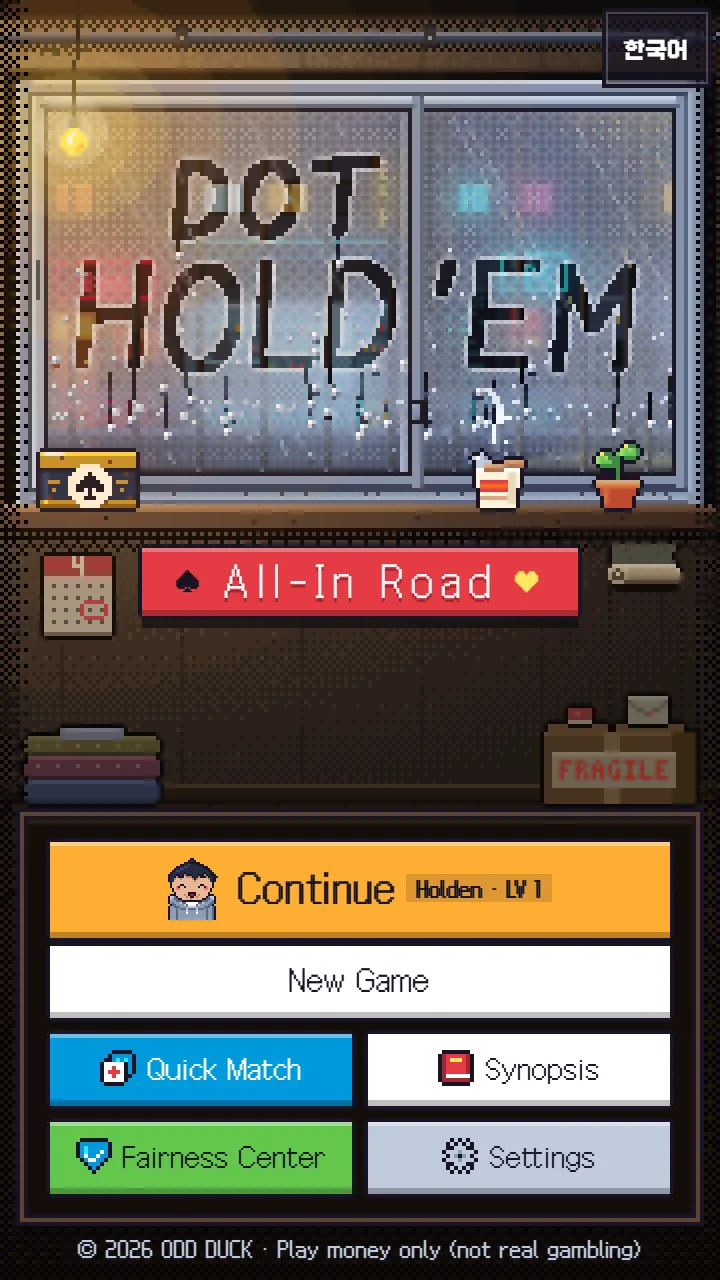
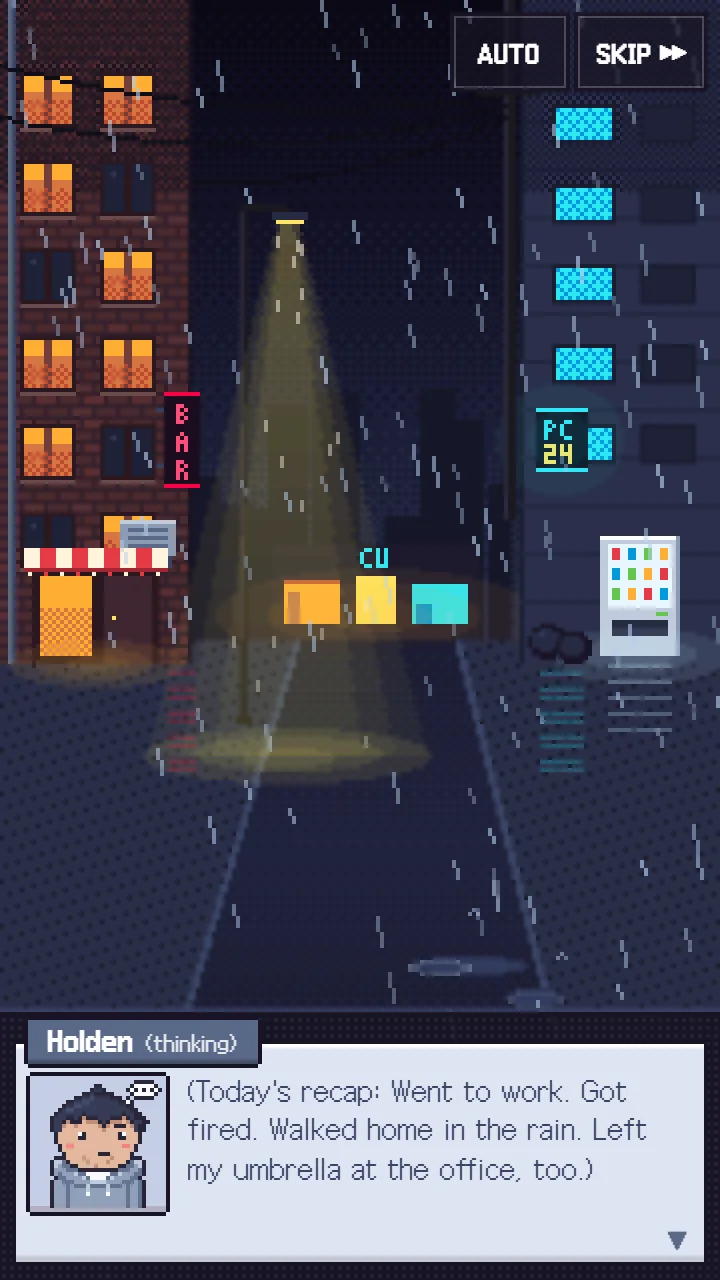
Five things that set it apart from other hold’em apps
There are plenty of hold’em apps. Most of them have you take on other people online, or trade chips with an AI that plays by a fixed script. DOT HOLD'EM adds five things to that table — a story, a Korea arc and a World arc, guidance that helps you improve as you play, an AI that keeps getting stronger, and a Fairness Center where you verify the shuffle yourself.
① Hold’em with a story
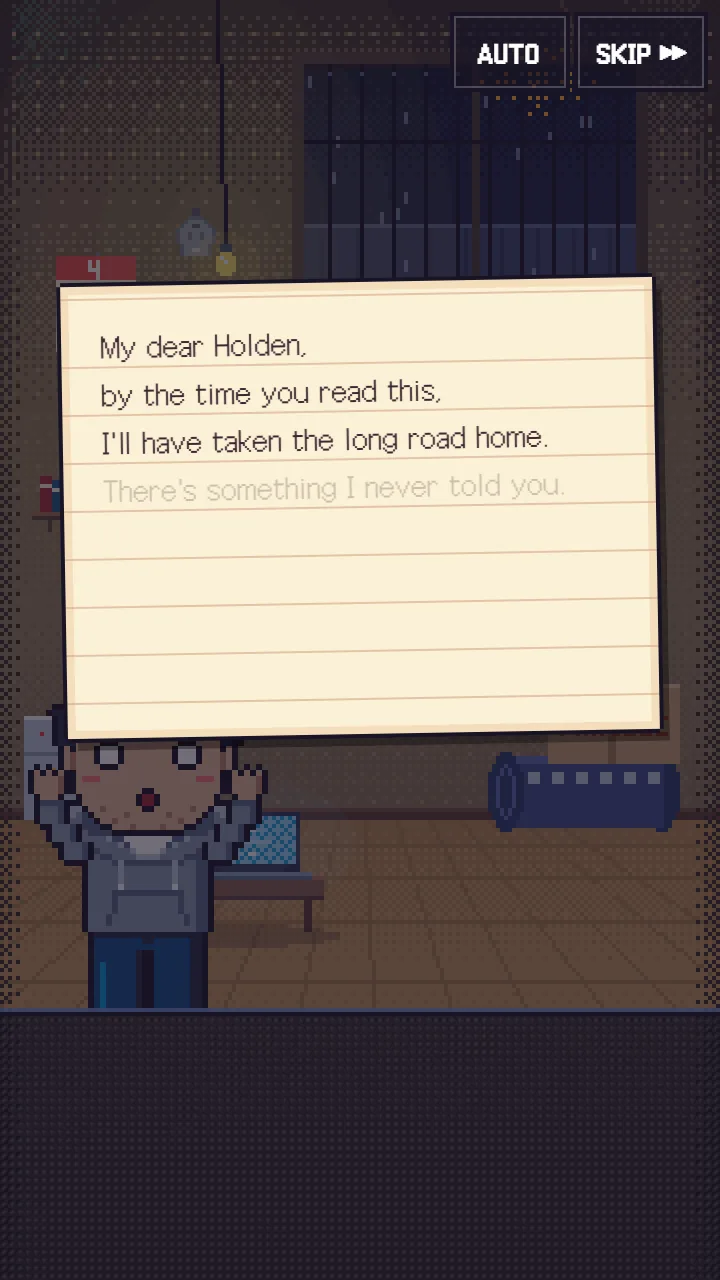
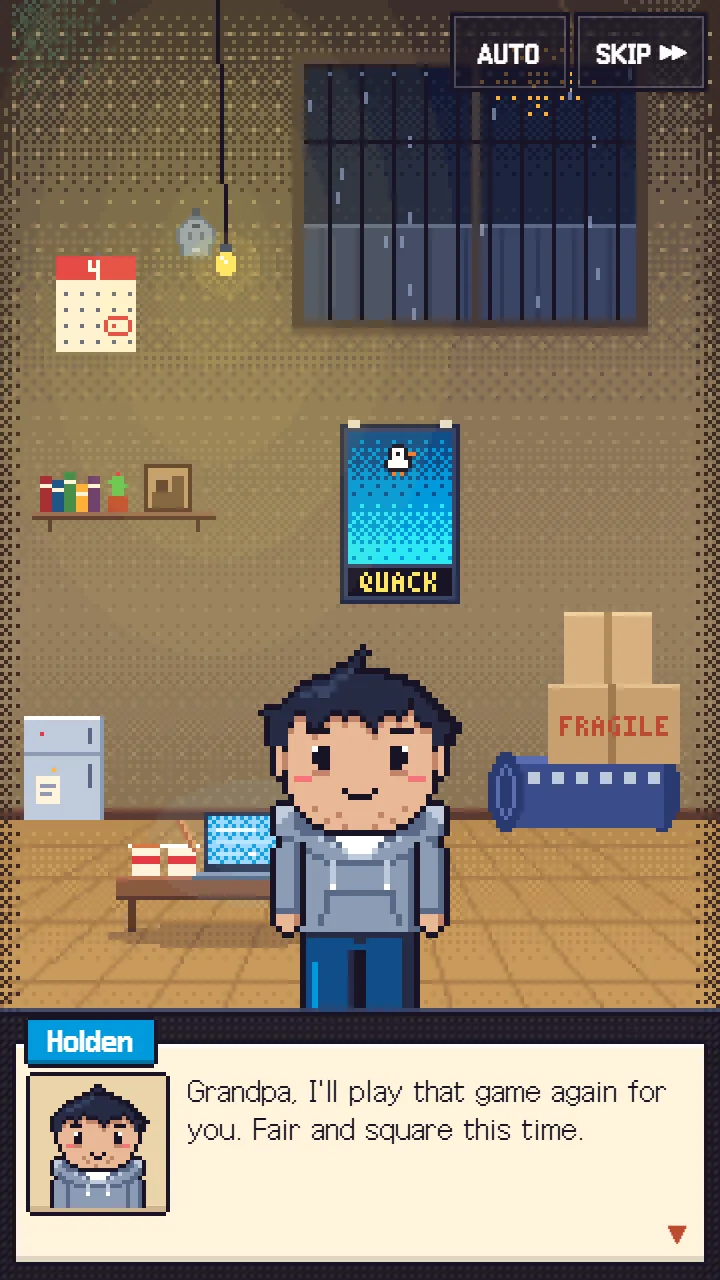
The hero is twenty-nine. In a single day, he gets fired from his job and receives a text from his landlord about rent that’s now two months overdue. That night, a box of his late grandfather’s belongings arrives from Busan: a well-loved deck of cards, an old chip engraved with “銀手” (“The Silver Hand”), and a letter.
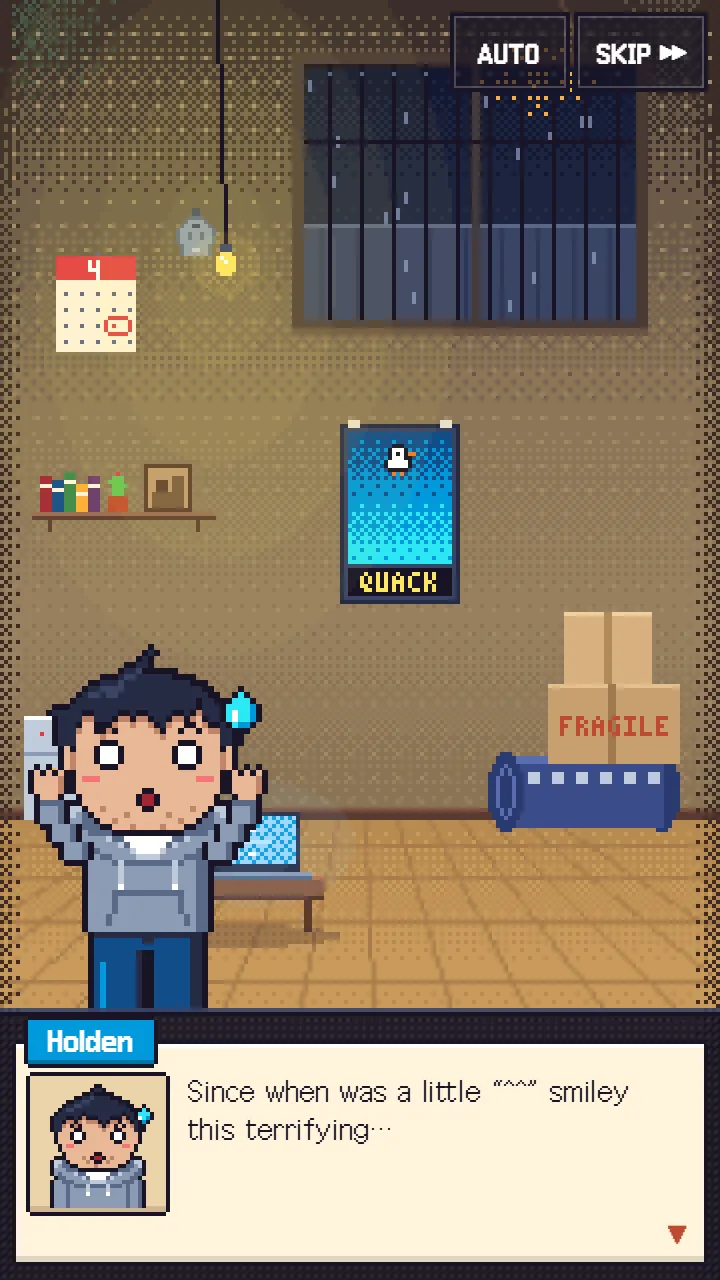
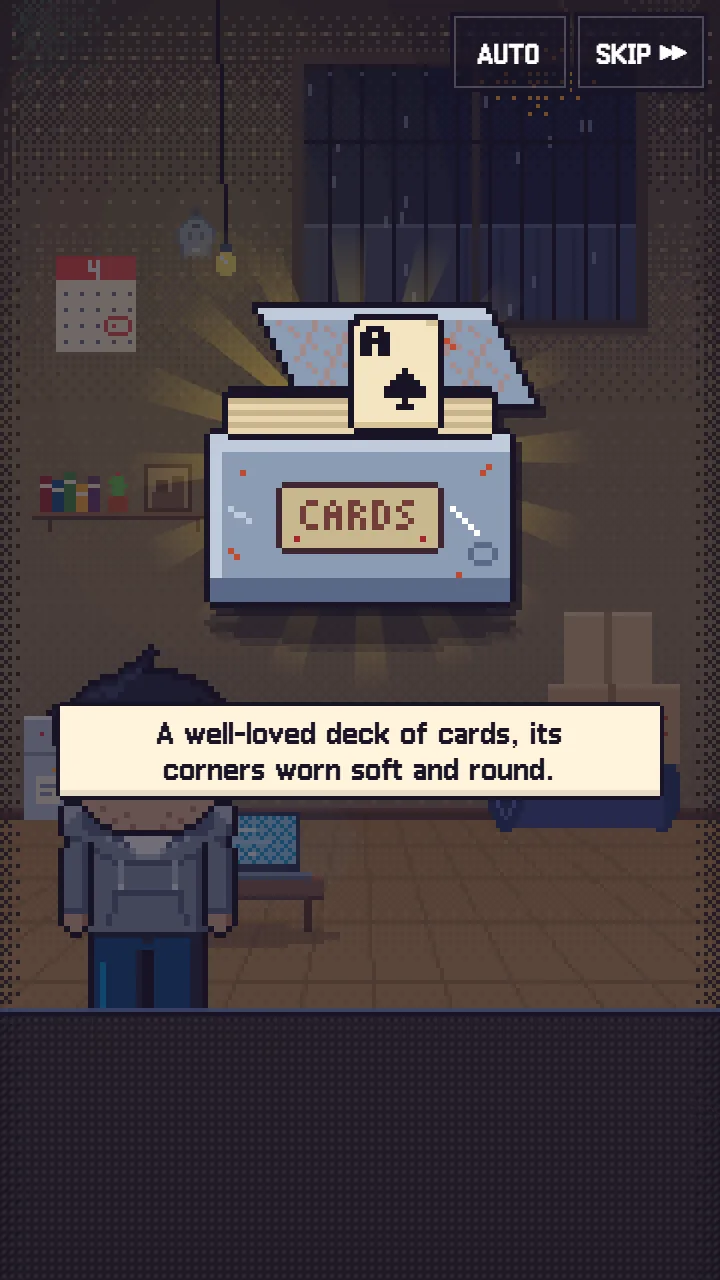
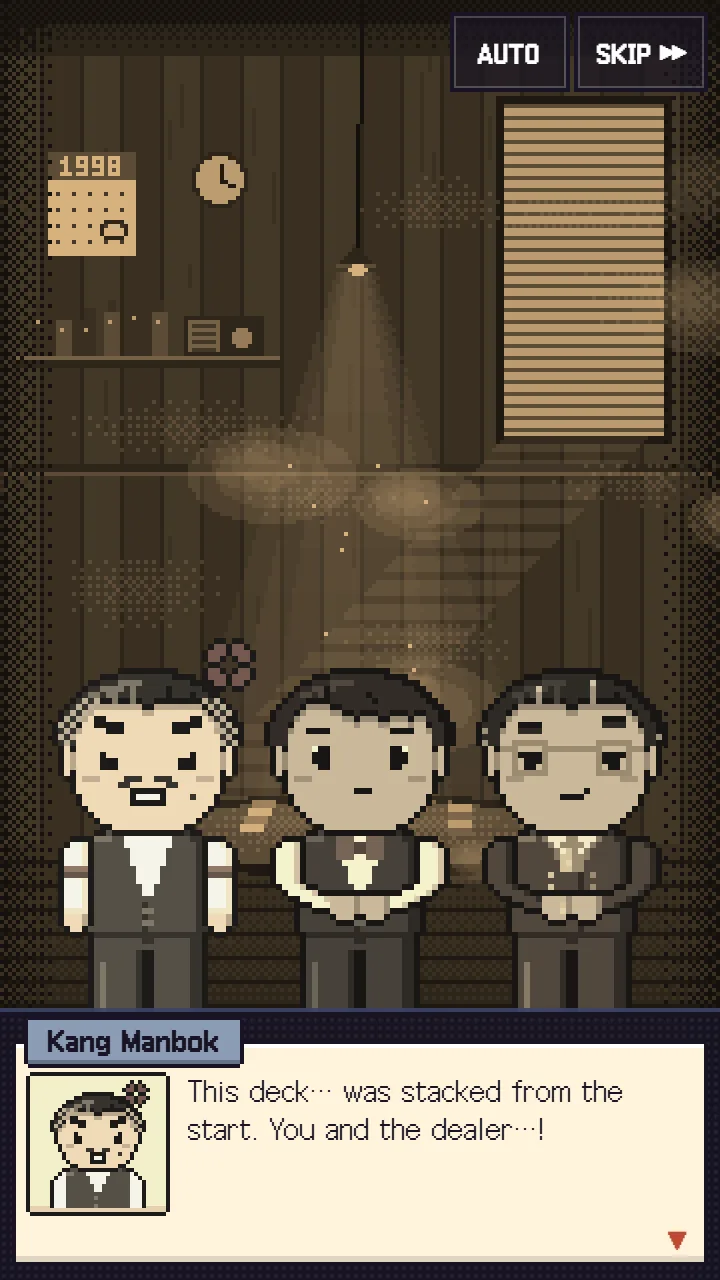
The letter tells the story of one last game in Busan in 1998. The deck in that game was stacked from the start, and the man across the table has since become a casino tycoon who promises “a perfectly fair stage.” The hero challenges him to “one fair game.”
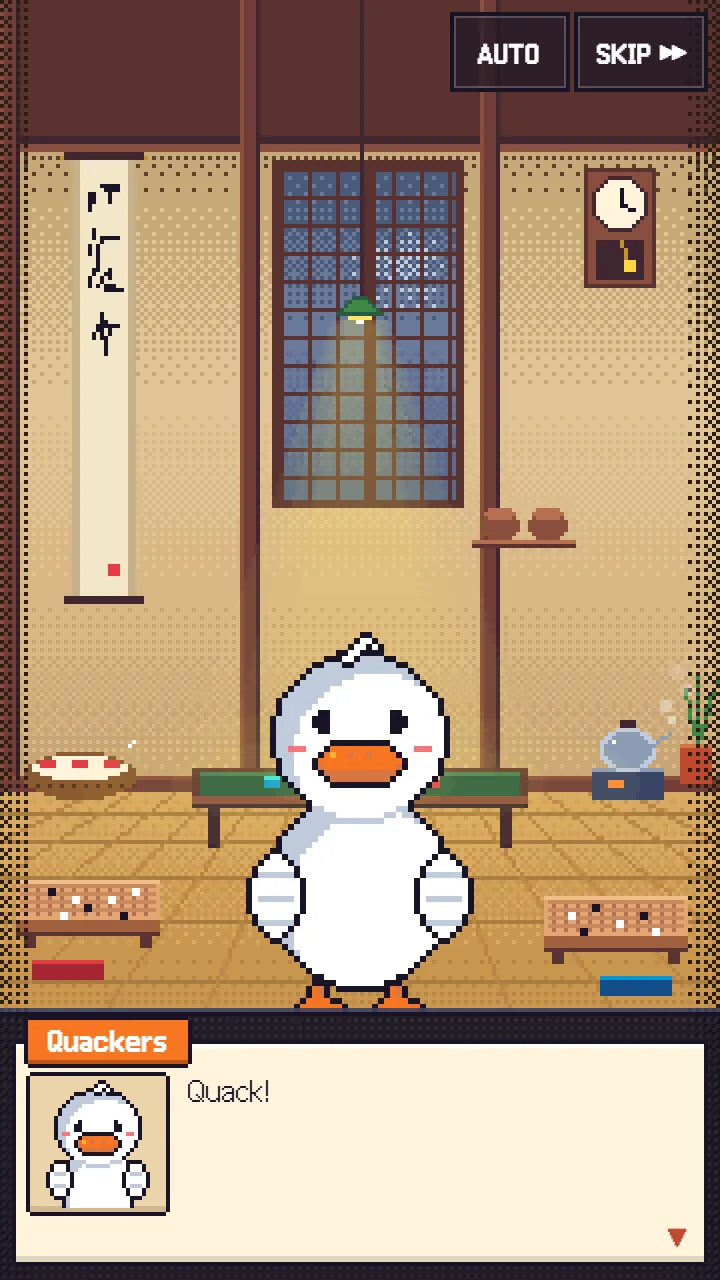
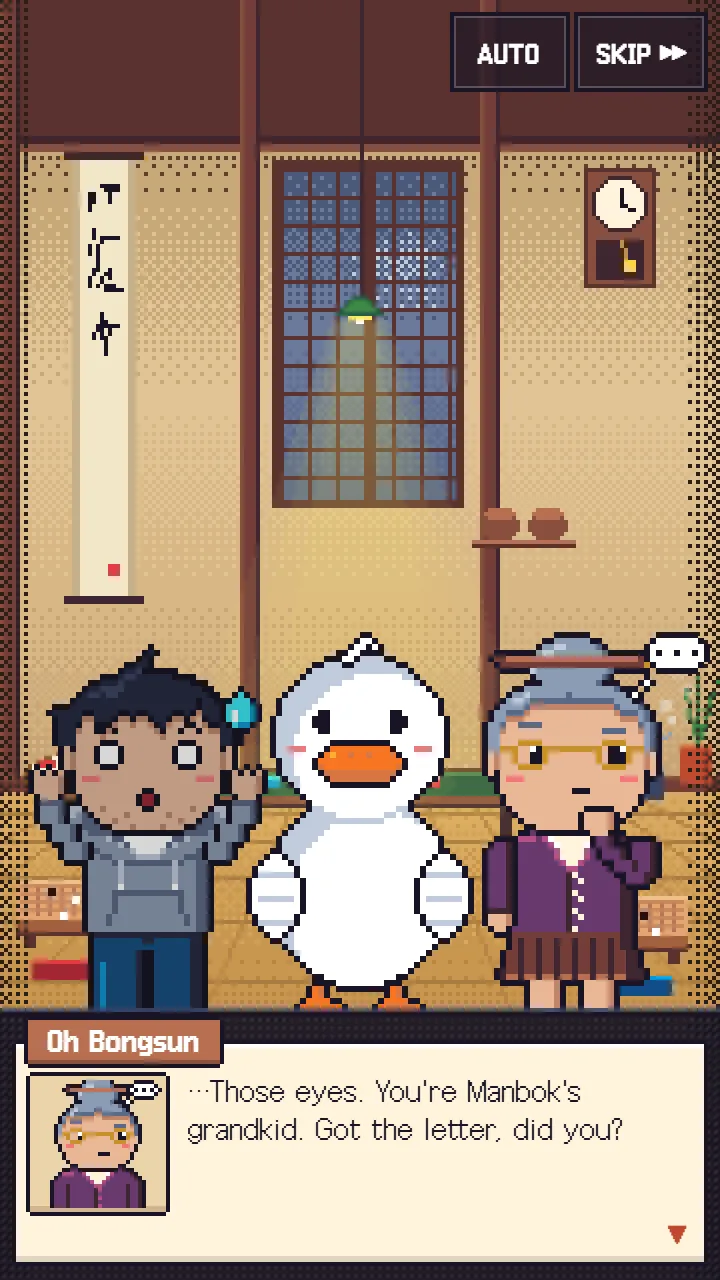
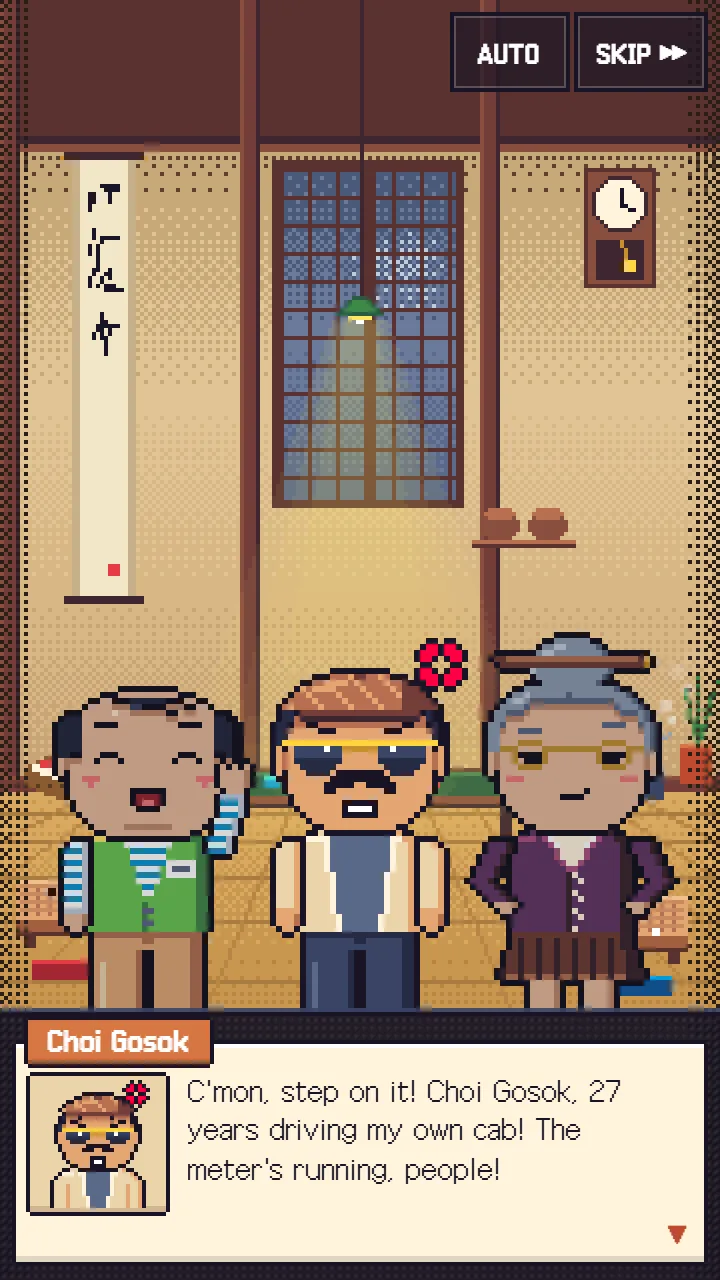
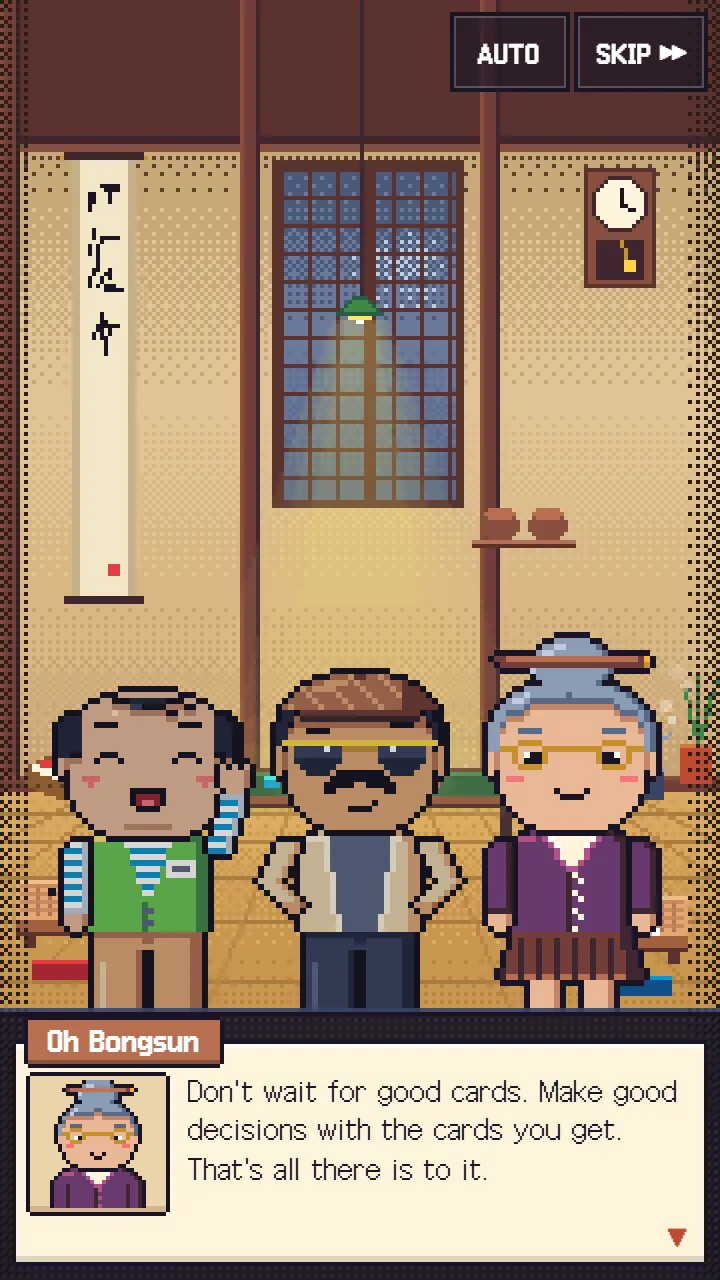
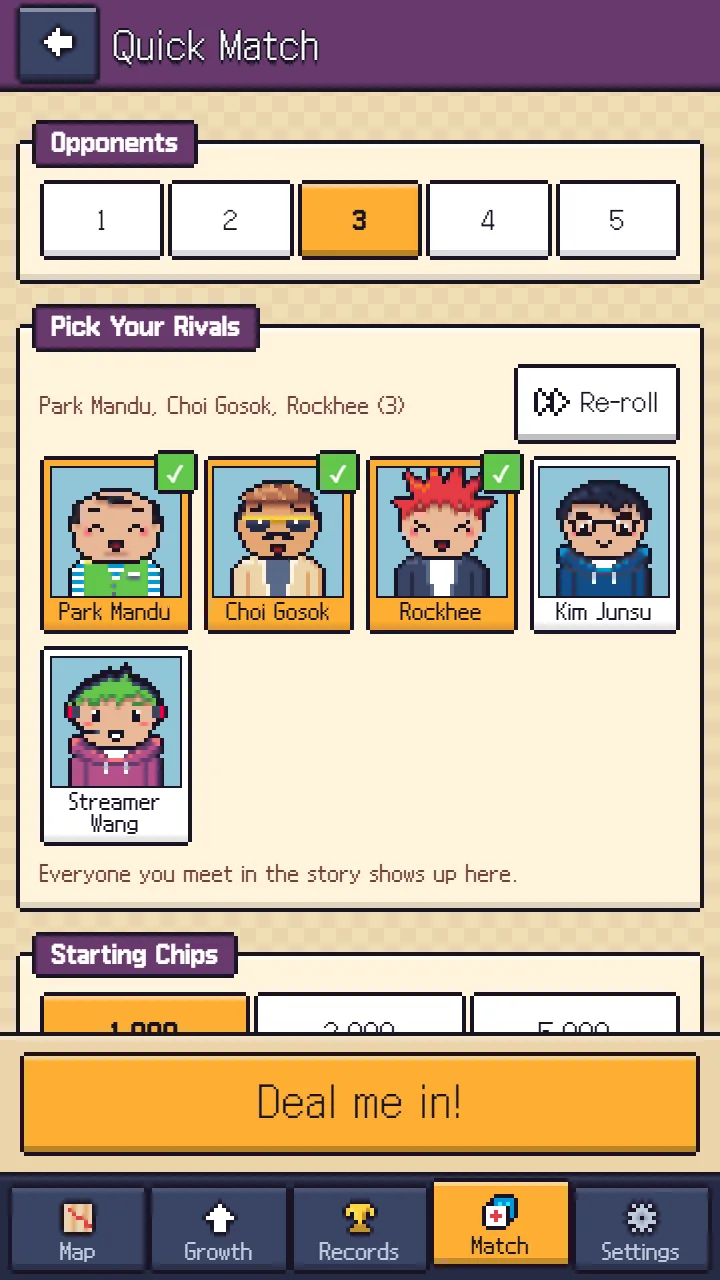
The first stage is Bongsun’s Go Club, tucked away in a back alley of Jongno. Open the door and Quackers the duck greets you first, then Grandma Bongsun — who played at the same tables as Grandpa for 30 years — teaches you hold’em. From convenience-store owner Park Mandu to Choi Gosok, 27 years behind the wheel of his own cab, 35 characters sit down at the table, each with seven facial expressions, a way of talking and a style of play all their own.
② The Korea arc and the World arc
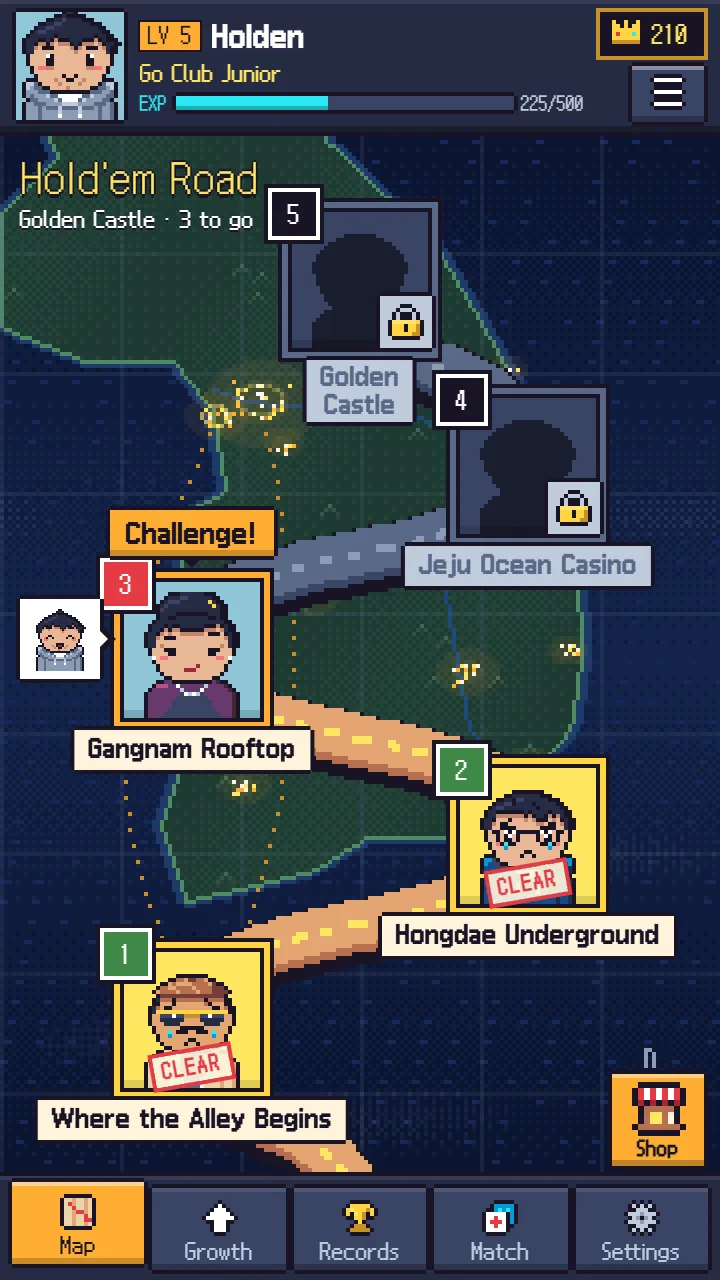
The Korea arc runs five chapters: starting from a semi-basement room, it takes you through Bongsun’s Go Club in Jongno, Hongdae Underground, Gangnam Rooftop and Jeju Ocean Casino, all the way to Golden Castle in Incheon. Each chapter opens with a cutscene and ends in a one-on-one showdown with a boss.
Reach the end of the Korea arc, and the World arc opens up. As for which cities it leads to — ? — see for yourself.
③ Hold’em you learn as you play
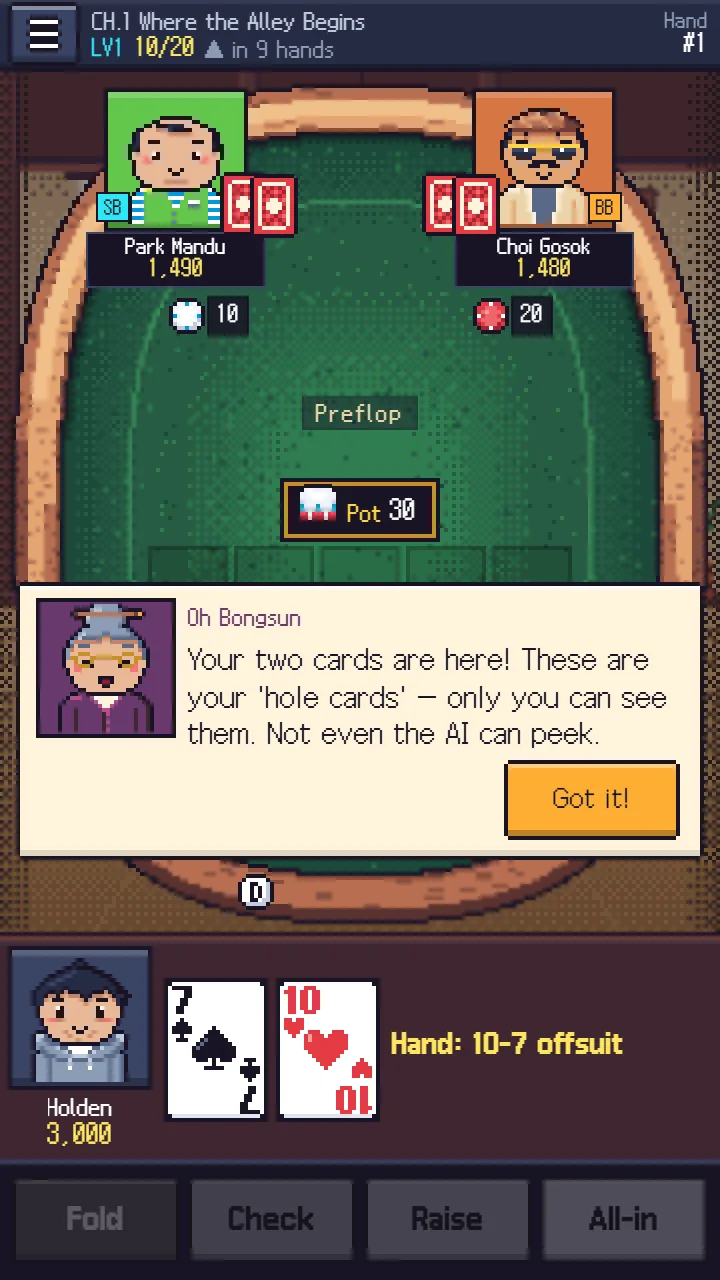
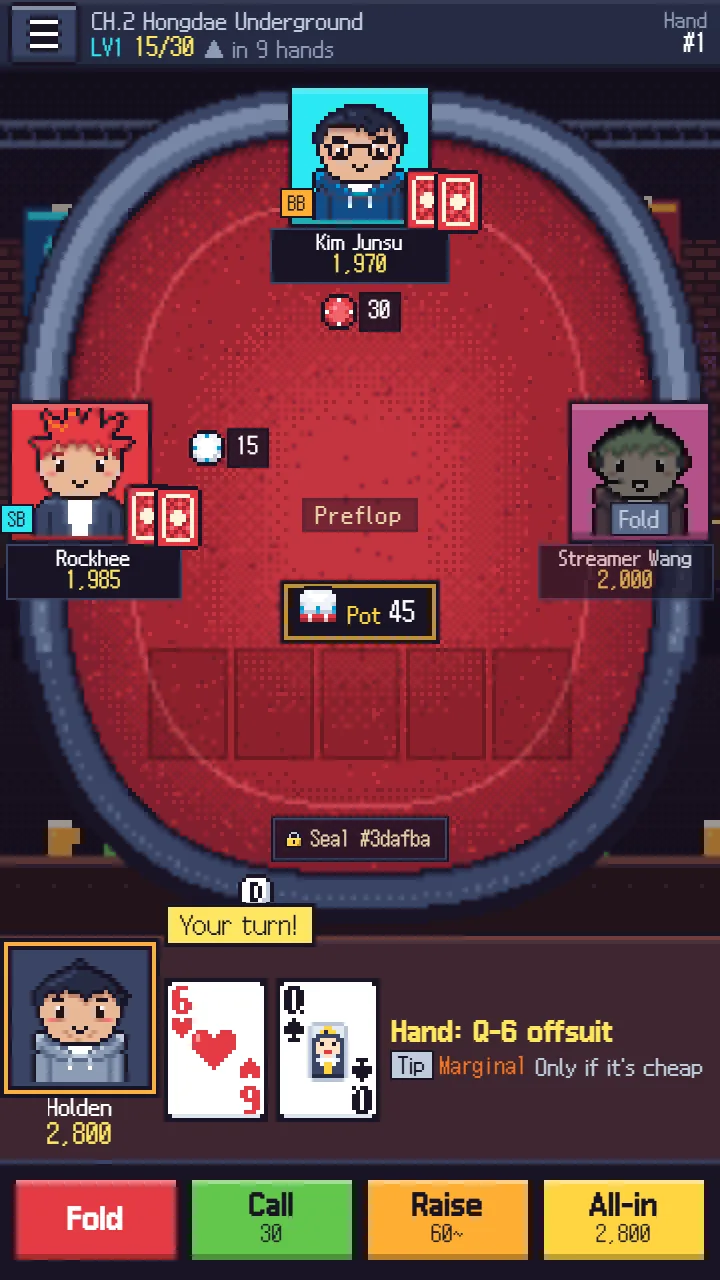
Like the hero, who thought blinds were something you hang over a window, first-timers are welcome here. In Chapter 1, Grandma Bongsun sits beside the table and walks you through it step by step, and a single line at the bottom of the screen tells you what you’re holding and what kind of hand it is.
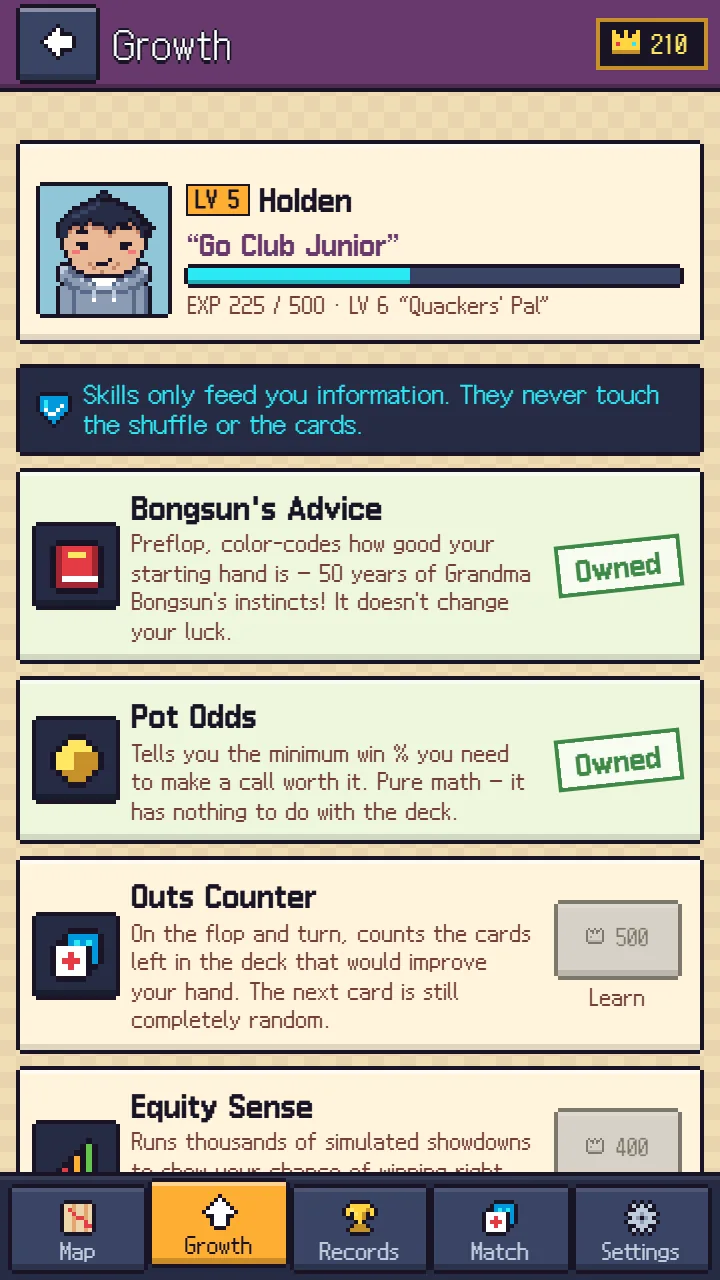
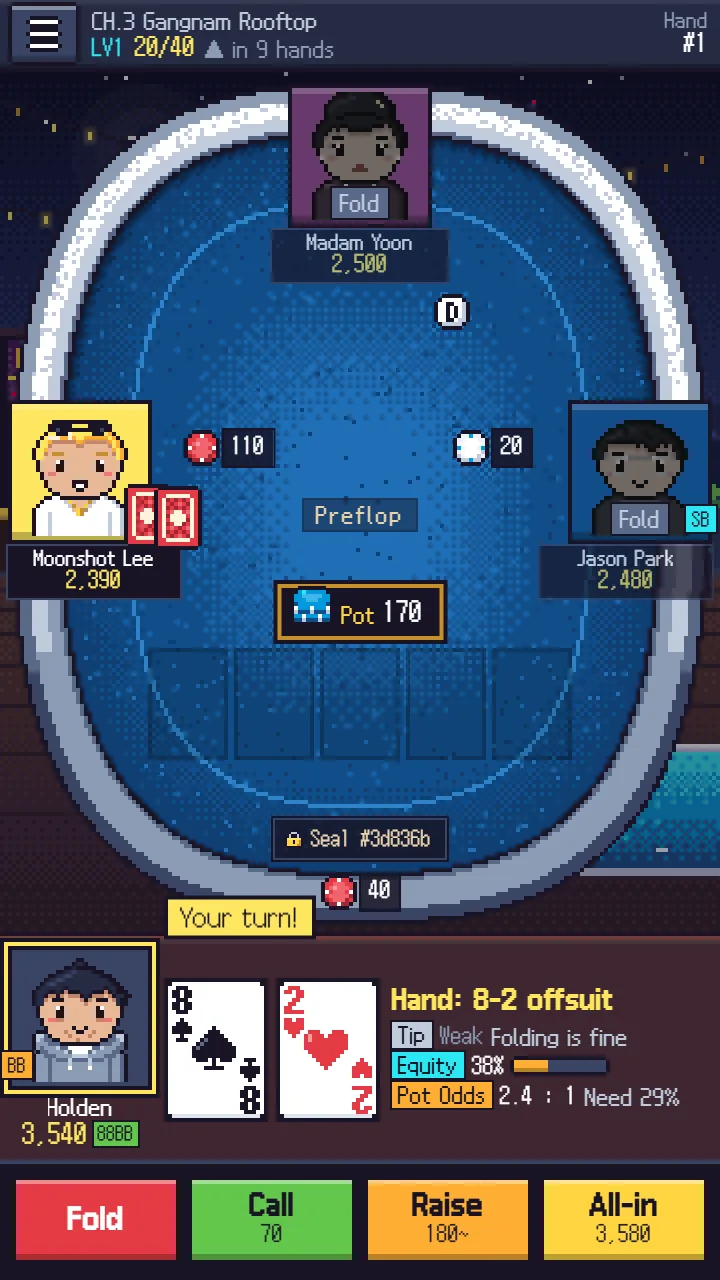
Win games and you build up Fame, which you use to learn skills — Bongsun’s Advice, Pot Odds, Outs Counter, Equity Sense, Player Reads and Stack Sense. How much equity you need to make a call, how likely your hand is to win right now: the math real hold’em players use is shown right there on the table. Skills are only information to help you decide; they never touch the shuffle or the cards.
④ AI that keeps getting stronger
Poker was a long-standing challenge for artificial intelligence research. In January 2017, Carnegie Mellon University’s Libratus played 120,000 hands against four pros and came out ahead by $1,766,250 in chips (Wikipedia), and in 2019 Pluribus, built by the same researchers together with Facebook AI, beat pros at six-player no-limit hold’em. Pluribus learned its baseline strategy by playing against six copies of itself (Carnegie Mellon University).
The benchmark this research has refined is GTO (game-theory optimal strategy). DOT HOLD'EM’s AI comes in nine styles — Beginner, Calling Station, Maniac, Rock, loose-aggressive (LAG), tight-aggressive (TAG), Math Player, Pro and Boss — and the stronger the character, the more it layers its own personality on top of a baseline strategy close to GTO, so the opposition gets tougher with every chapter. Opponents read your playing habits and exploit them, and when they’ve read you, they let you know with a single line. Even so, the AI sees only public information. It can’t see your hole cards or the rest of the deck.
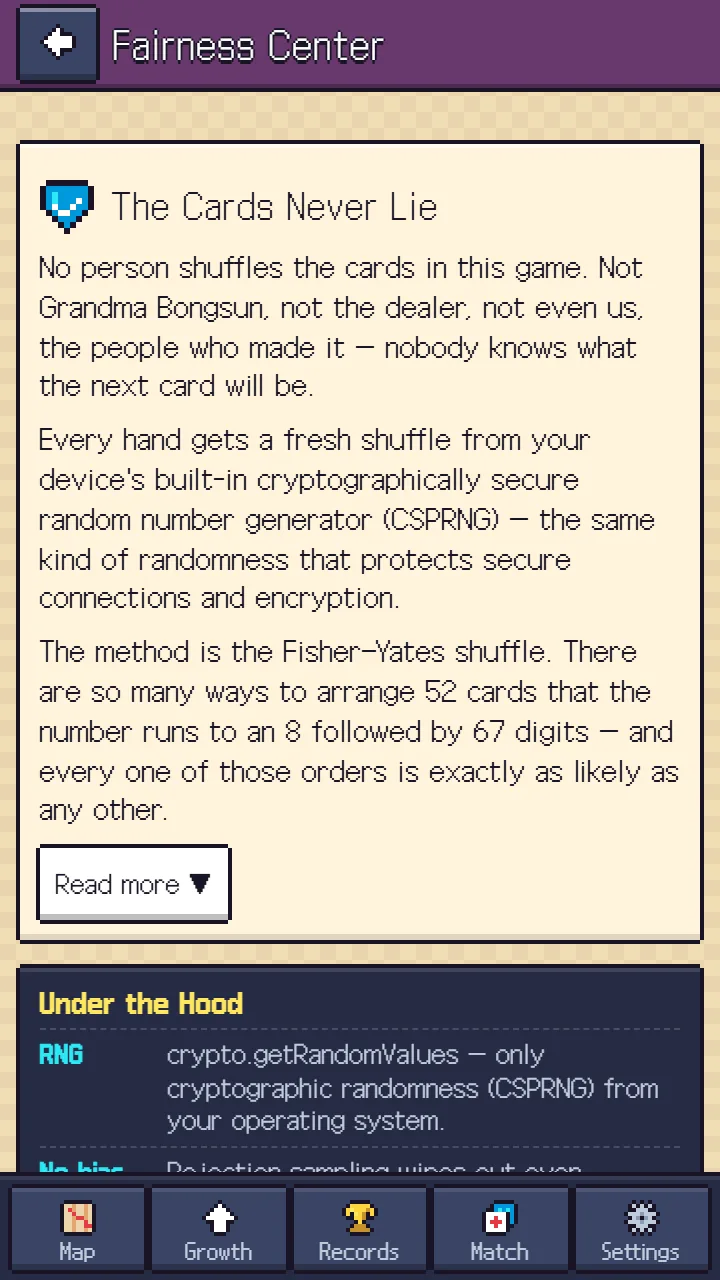
⑤ A Fairness Center that verifies the shuffle
In September 1999, security researchers in the United States announced they had cracked the shuffle used in online poker. The shuffle several poker sites relied on used a 32-bit seed, so it could produce only about 4.3 billion possible orders — while a single deck can be shuffled in 52! (about 8×10⁶⁷) ways. And because even the seed came from the time of day, seeing just your own two cards and the three flop cards was enough to know everyone’s cards, and even the winner, in advance (Datamation).
That’s why DOT HOLD'EM doesn’t hide its shuffle — it shows it. The cards are shuffled with cryptographic random numbers from the operating system, using the Fisher–Yates method, which makes every possible order of the 52 cards exactly equally likely. Before a hand begins, the fingerprint of the shuffled deck (a SHA-256 hash) is posted first as a “Seal”, and once the hand is over, the deck order is revealed. Anyone can recompute the fingerprint and confirm nothing was swapped. In the Fairness Center, you can verify recent hands yourself and run a 20,000-shuffle uniformity test in real time.
It’s not something you often find in a light, casual game. But think of Grandpa’s letter: if the shuffle is fair, all that’s left is your own judgment.
How to play
- Story — Watch each chapter’s cutscene, then take your seat at the table. Lose, and [Retry] puts you straight back in your seat — and the deck is always shuffled just as fairly.
- Quick Match — Pick 1 to 5 characters you’ve met in the story, your starting chips and the blind speed, and play a game.
- Controls — Fold · Check/Call · Raise · All-in. To raise, set the amount with the slider or with buttons like ½ Pot and Pot.
- Records — Your hands played, win rate, biggest pot and best hand are kept.
- Languages — Korean and English.
- Play chips only — No real money or goods change hands, and the game does not encourage gambling.
A night of not waiting for good cards, but making good decisions with the cards you get. We hope it’s that kind of game for people who love hold’em, and for people taking a seat at the table for the first time with this game.