Piano Games: Their History and Today’s Popular Titles — Console, Mobile and WeChat
Piano games share simple inputs, but songs, replay goals and platform habits shape very different experiences.
Piano games differ in why they make you want to play the same song again. On mobile, compare song selection and score competition; on consoles, performance challenges, duets and exploration; on WeChat, the route into a song shared by a friend. A new game needs both an easy first song and a clear goal after finishing it.
Piano games compete through the songs and goals they build around simple controls. Looking at mobile tile tapping, console performance and exploration, and song sharing on WeChat reveals different ways to keep people playing.
Popular titles now: familiar tiles, different songs and goals
Fact — Magic Tiles 3, Magic Level 9 and Piano Tiles 2 all appeared near the top of the free iPhone Music Games charts in South Korea and the US. Their US positions were 1, 3 and 11; in South Korea, they ranked 2, 7 and 6. An established series and other games with similar controls share the chart. [US chart · South Korea chart, accessed 2026-10-15 at 23:37 KST]
| Game · Developer | US | KR |
|---|---|---|
| Magic Tiles 3Amanotes | #1 | #2 |
| Magic Level 9Kim Nguyen | #3 | #7 |
| Piano Tiles 2Kooapps | #11 | #6 |
| Piano PopMWM | #13 | Absent from top 25 |
These are that day’s free Music Games rankings. They do not measure revenue, overall game rankings or worldwide users. Developers and descriptions come from each store listing; rankings come from the Apple charts above (accessed 2026-10-15).
Magic Tiles 3 — Song choice and competition
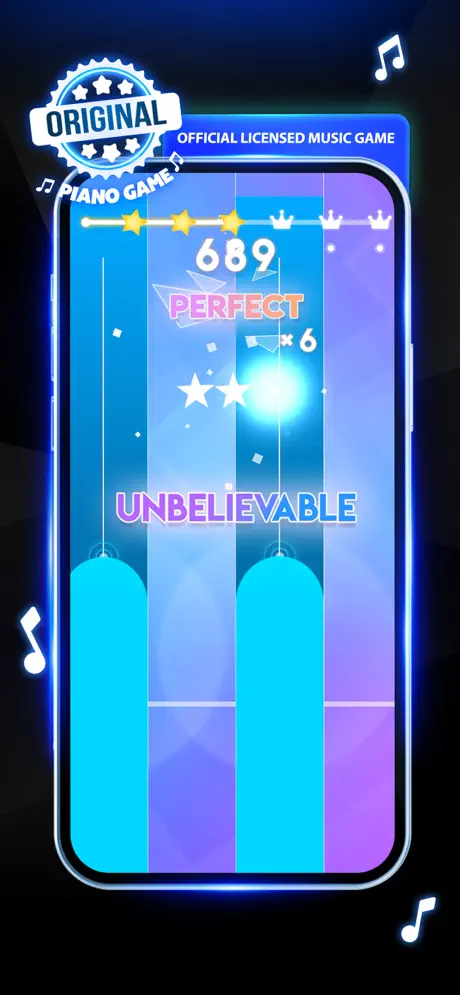
Fact Players tap black tiles and hold long tiles to play a song. Amanotes highlights licensed music, battles with friends and weekly tournaments. Its VIP offering includes benefits such as ad removal and song access. [Amanotes app listing · Google Play, accessed 2026-10-15]
Comment Tapping tiles is quick to learn. The next choices are which song to play and whom to compete with. When designing a similar game, it is worth comparing the song selection screen and the goal after each performance before adding more tile types.
Store promotional image · Amanotes / App Store · accessed 2026-10-15
Piano Tiles 2 — Learn a song, then push the pace
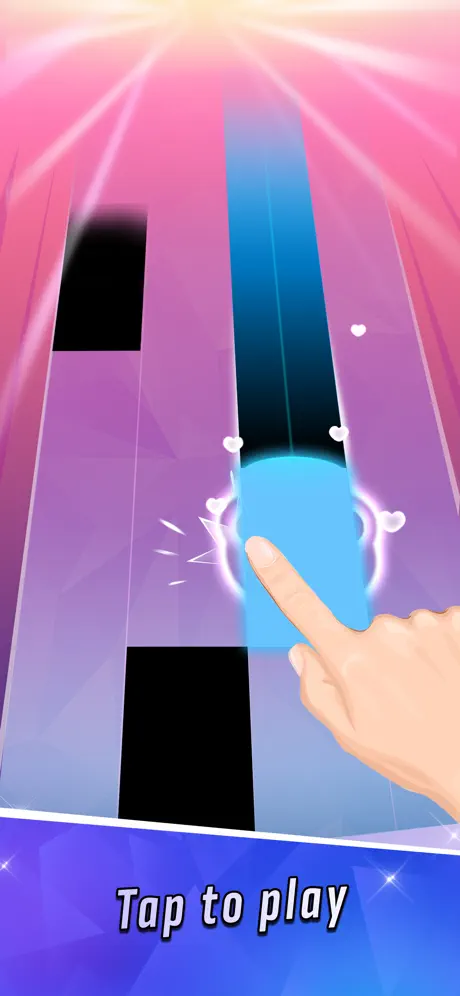
Fact Kooapps’ current listing emphasizes avoiding white tiles, tapping black tiles, speed challenges, and music including classical pieces, ragtime and waltzes. Alongside the standard game, the Apple Arcade edition, Piano Tiles 2+, offers play without ads or in-app purchases. [Standard edition · Piano Tiles 2+, accessed 2026-10-15]
Comment A familiar song gives players a reason to return if they can last longer or beat their score. Beyond song count, look at how scores, speed and difficulty provide a natural next step after the first complete performance.
Store promotional image · Kooapps / App Store · accessed 2026-10-15
Piano Pop — Familiar inputs, a different feel
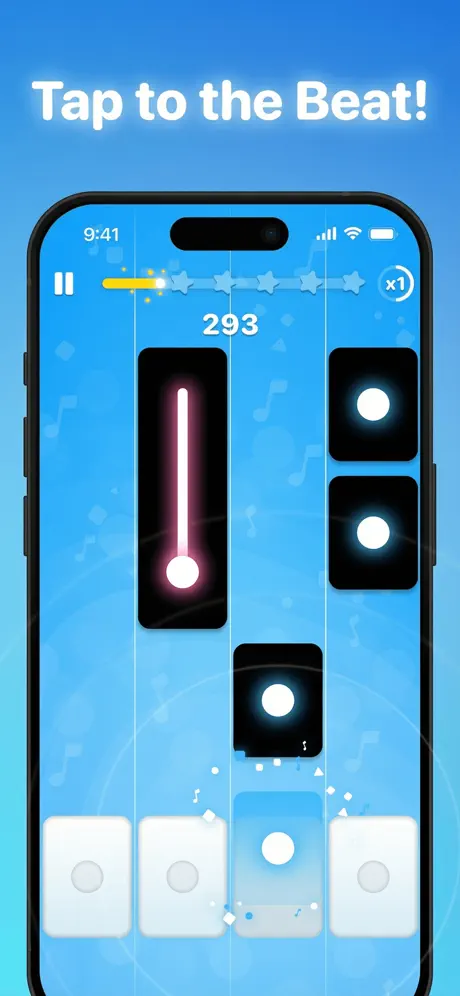
Fact MWM highlights pop, rock, K-pop and classical music, weekly song additions, leaderboard competition with friends, and customizable backgrounds. Its public images show short and long tiles descending through four lanes. [MWM app listing and images, accessed 2026-10-15]
Comment Short and long tiles alone can create plenty of variation in hand movements. Rather than continually adding new controls, compare how the song’s mood, tile pattern and background work together.
Store promotional image · MWM / App Store · accessed 2026-10-15
Two more titles to compare
Fact Magic Level 9 features black-tile taps, long holds, two-tile inputs and an endless challenge. Piano Fire is an Android game by Adaric Music. Its listing describes songs including EDM and both online and offline play. [Magic Level 9 · Piano Fire, accessed 2026-10-15]
On mobile, song selection and the next challenge deserve attention before tile colors. These rankings alone cannot establish that a particular song or feature caused a game’s popularity. But sorting games with similar simple inputs by their music, replay goals and payment models makes their differences easier to see.
From physical keys to tiles on a screen
The history of piano games moves between recreating a keyboard and making performance easy to start. These titles mark some of the choices along the way.
- 2000KEYBOARDMANIA
Konami introduced an arcade game in which players used a real Yamaha keyboard to play descending notes. A PlayStation 2 version also arrived in 2000. The physical feel of the keys was central to the experience. [Konami product archive · PS2 release information, accessed 2026-10-15]
- 2013DEEMO — Piano and story
Rayark released DEEMO on November 13, 2013. By combining piano melodies and falling notes with a story, it gave players another reason to perform: reaching the next scene. [Rayark’s official exhibition page · Official DEEMO page, accessed 2026-10-15]
- 2014–15Piano Tiles and Piano Tiles 2
Apple’s official weekly chart for the week ending June 9, 2014 lists the original Piano Tiles — Don't Tap the White Tile at number 4 among free iPhone apps. Cheetah Mobile released the sequel, Piano Tiles 2, in 2015. The brief rule of tapping black tiles became a way to play music on a small screen. [Apple chart carried by AP, 2014-06-10 · Cheetah Mobile announcement, 2015-12-07]
- 2017–18DEEMO · Nintendo Labo · PIANISTA
DEEMO brought performance and story to Switch in 2017. Nintendo announced Labo in 2018, including a build-it-yourself cardboard piano with 13 keys. That same year, PIANISTA on Switch offered four- and six-input play and two-player duets. Stories, making things and playing together expanded the options beyond touch controls. [DEEMO · Labo announcement, 2018-01-17 · PIANISTA, accessed 2026-10-15]
- 2018钢琴块2 (Gangqin Kuai Er) comes to WeChat
According to a presentation given by the development lead in January 2019, the WeChat version launched in late May 2018. Cocos also documented its move to WeChat in a 2020 case study. Bringing the game across involved changes to early difficulty and how players shared it with friends. [Republished developer presentation transcript, 2019-01-07 · Cocos, 2020-08-14]
- 2025–26A subscription edition and a PC announcement
Kooapps announced Piano Tiles 2’s move to Apple Arcade in 2025 and previewed a Steam edition in 2026. As of October 15, 2026, the Steam listing has no announced release date. The familiar tile rules are reaching other devices and sales models. [Kooapps news, 2025-03-04·2026-08-07 · Steam listing, accessed 2026-10-15]
What has lasted is the feeling of playing a song with your own hands, more than the shape of the keyboard. Whether the input comes from dedicated keys, a touchscreen or a controller, sound needs to match the action, and finishing a song should leave a sense of achievement.
Consoles: master a song or open the next room
Fact PIANISTA and DEEMO -Reborn- were listed on Nintendo’s official store as of . Both pages state that their behavior on Switch 2 is consistent with the original Switch. [PIANISTA · DEEMO -Reborn-]
PIANISTA — Mastery and two-player duets
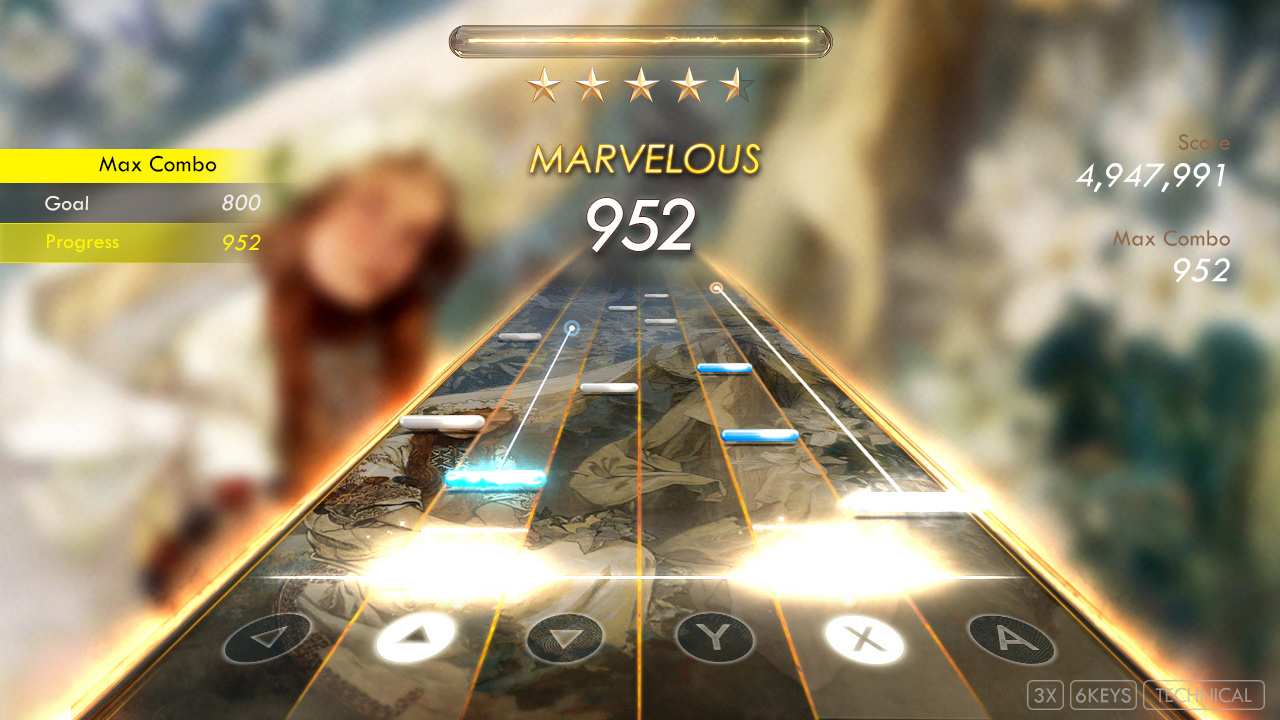
Fact In MATINÉE, players choose four- or six-input play, perform three songs and compete for scores. CONCOURS offers themed challenges, while ENSEMBLE supports two-player duets using Joy-Con. Piano appearances inspired by famous paintings provide a collection goal. The Switch release date is October 25, 2018. [Nintendo’s official listing, accessed 2026-10-15]
Comment A different number of inputs or a new challenge can give players more to learn in the same song. Duets offer a reason to play beyond improving a solo score. For a console piano game, consider how two people might enjoy a familiar piece as well as which harder songs to add.
Public gameplay image · Superb / Nintendo · accessed 2026-10-15
DEEMO -Reborn- — Performance that leads into exploration
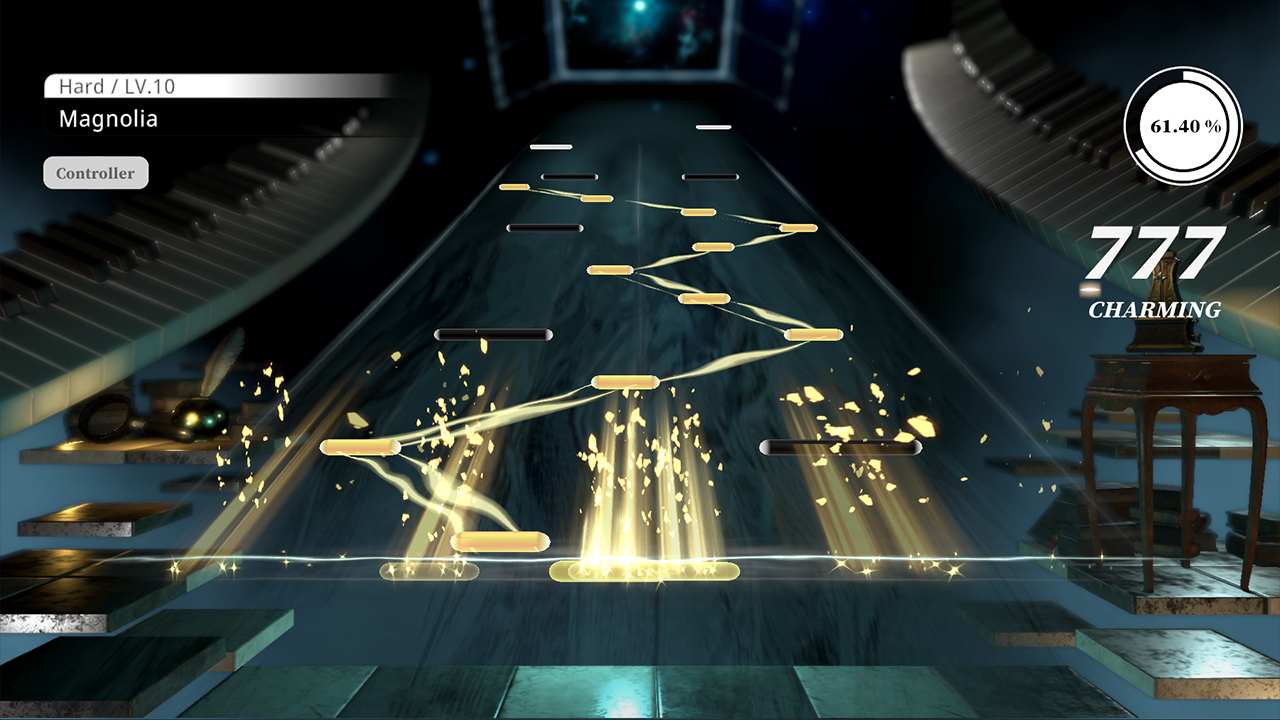
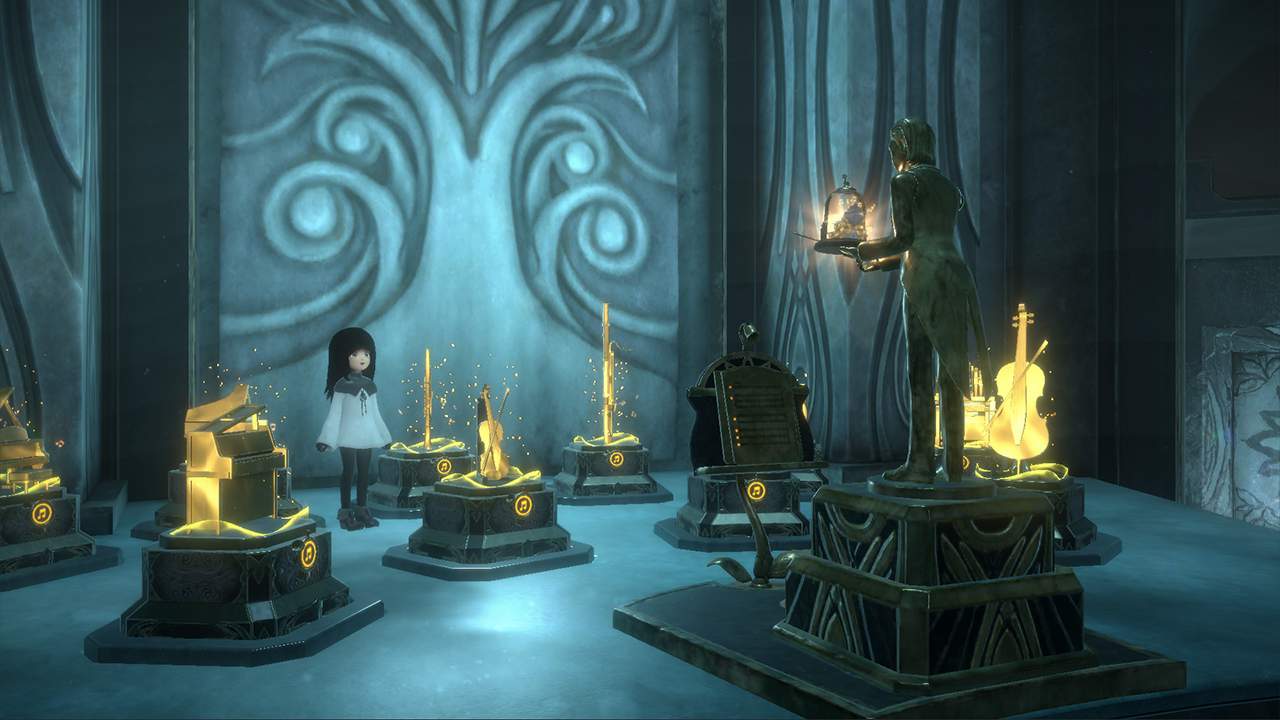
Fact Rayark presents piano performance, castle exploration and puzzles together. Players perform to grow a tree and follow the story. TV mode on PS4 and Switch uses analog sticks and corresponding buttons; separate VR play is available in supported PSVR and Steam environments. The Switch edition was released on December 31, 2020. [Rayark’s Korean feature page · Nintendo’s official listing, accessed 2026-10-15]
Comment The reward for reaching another song also lies beyond the score screen. New spaces and the next scene give players a reason to perform. Longer exploration can, however, leave someone who wants to play music waiting. The design task is to set the balance between performance and exploration and keep the route back to a song short.
Public performance and exploration images · Rayark / Nintendo · accessed 2026-10-15
On consoles, consider goals for mastering performance separately from the fun that continues outside a song. PIANISTA’s challenges and duets and DEEMO’s exploration represent different choices. Rather than fitting everything into one game, decide whose time the game is meant to fill and how.
WeChat: go straight to the song a friend shared
Fact 钢琴块2 (Gangqin Kuai Er) still appeared in MoonFox’s WeChat mini-game growth list in May 2025. This is a 2025 record. It shows the title continuing to appear years after its 2018 arrival on the platform. [MoonFox May 2025 data, published 2025-06-19]
Fact The development lead’s 2019 presentation describes a change that remains useful to consider. Friends opening a shared popular song initially had to go through a beginner song. The team changed this so they would go straight to the performance screen for the shared song. The presentation also described tournaments and matches with strangers alongside competition on friends’ leaderboards. [Developer presentation, 2019-01-05; transcript republished 2019-01-07]
Comment If the share card features a song, the first screen should lead to that song. Requiring a tutorial first can clash with the reason someone accepted the invitation. Teach the necessary controls briefly within the song, then show a friend’s score or the next challenge after one performance: that is a useful lesson from this case.
美妙钢琴块 (Meimiao Gangqin Kuai) — Songs, backgrounds and star ratings
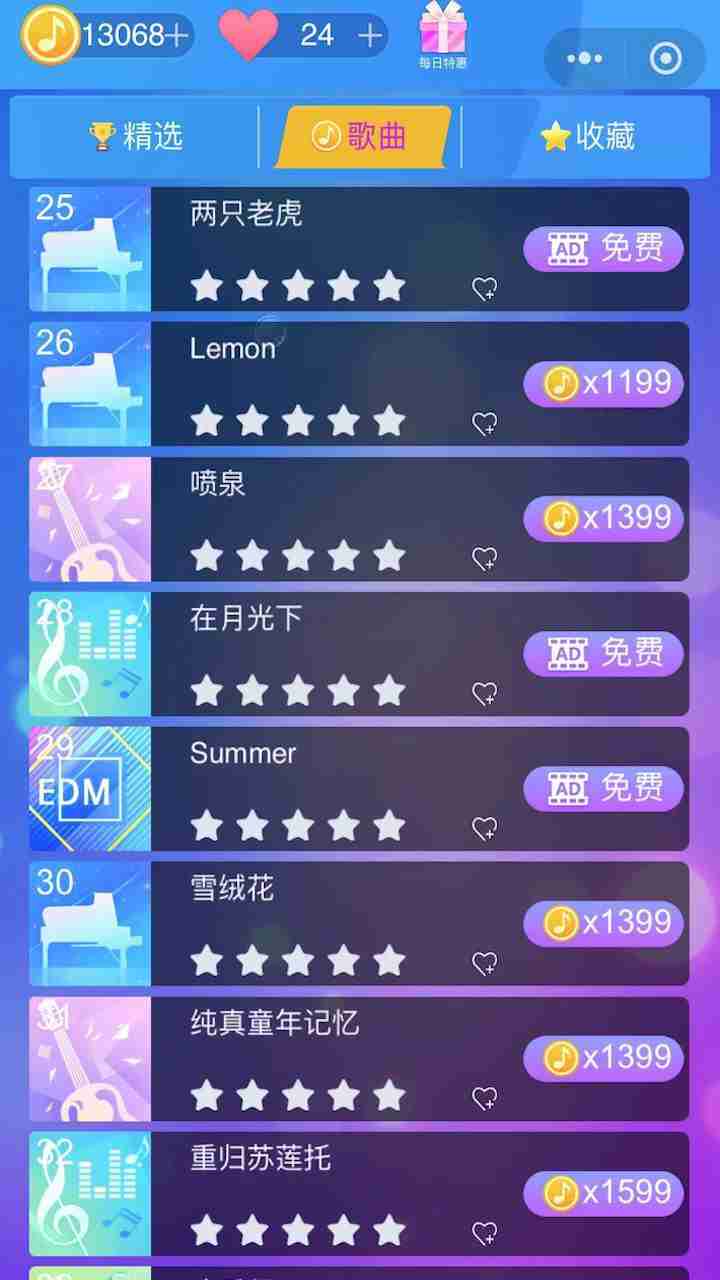

Fact — the 7K7K WeChat game page shows a song list, star ratings and currency labels for individual songs, background selection, and black-tile gameplay. The two images above show the song list and performance screen. [7K7K game page and public images, accessed 2026-10-15]
Comment This can be read as familiar tile play with song-specific achievements and customization goals. More useful than counting backgrounds is checking whether difficulty and unlock requirements are clear when choosing a song, and whether the next goal is visible after finishing one.
Public images from 7K7K · Game page · accessed 2026-10-15
Moving to WeChat calls for attention to the way players enter and why they invite someone else, as well as the performance rules. The song a friend sent, that friend’s score and the song you want to retry should connect naturally. Moving the song list and menus across unchanged is unlikely to make the most of that opportunity.
Recent changes: songs, goals and sales models
1. Songs sit at the center of ongoing operation
Fact Magic Tiles 3 highlights licensed songs and weekly tournaments, Piano Pop describes weekly song additions, and Piano Fire describes monthly additions. Each game advertises a different update schedule. [Magic Tiles 3 · Piano Pop · Piano Fire, accessed 2026-10-15]
For designers, the work extends well beyond deciding to add popular songs. Consider the region and tastes to serve, music usage terms and costs, and how well tile patterns can suit easy, medium and hard play. The more similar the controls, the more song selection and reasons to revisit songs can set games apart.
2. Uninterrupted performance is also a product
Fact Piano Tiles 2+ is offered through Apple Arcade without ads or in-app purchases. Its official listing names Mac, Apple TV and controller support alongside iPhone and iPad. Magic Tiles 3 includes ad removal in its separate VIP benefits. [Piano Tiles 2+ · Magic Tiles 3, accessed 2026-10-15]
For designers, Counting ad views alone can overlook the flow of a performance. Examine where interruptions occur when restarting a song, checking a record or choosing the next track. Compare free and subscription editions both by what they add and by how little they interrupt the music.
3. The same song can play differently across devices
Fact PIANISTA supports Joy-Con duets, DEEMO -Reborn- combines controller performance and exploration, and Piano Tiles 2+ supports several Apple devices. The unreleased Steam edition of Piano Tiles 2 previews features including notes that sound when pressed and an assisted mode. [PIANISTA · DEEMO -Reborn- · Piano Tiles 2+ · Steam listing, accessed 2026-10-15]
Before moving a game to another screen, establish why playing music on that device should be enjoyable. A pattern comfortable for fingers on a screen may differ from one played with buttons. Song length and retry design may also need to change depending on whether someone plays briefly alone or shares a living-room session.
Decisions to make before building a new piano game
To use these titles as design references, start with the experience to give a player rather than copying a popular game’s menus. The following are design suggestions based on the cases above.
| Experience | Games to compare | What to check first |
|---|---|---|
| Play a familiar song immediately | Magic Tiles 3 Piano Pop | Can players find a song they want on the first screen? Does its character survive on easy difficulty? |
| Master one song | Piano Tiles 2 PIANISTA | After finishing, are there records to improve and difficulties to tackle? Is restarting quick? |
| Perform alongside a story | DEEMO -Reborn- | Do players want to see the next scene? Is it quick to return to a song they have already played? |
| Try a song shared by a friend | WeChat’s 钢琴块2 (Gangqin Kuai Er), 2019 case | Does the exact song in the invitation open? Do players still have a reason to challenge each other when their skill levels differ? |
Testing only people who can play a song well from start to finish is not enough. Also examine how a beginner restarts after a first mistake, what someone chooses after completing an easy song, perceived timing differences between headphones and speakers, and play after returning from another screen.
Make the first song easy to start, and let players choose the second for themselves. When preparing a piano game, we would begin by refining that short stretch of play. Before adding more tiles or rewards, see whether finishing a song naturally leads to “just one more.”